
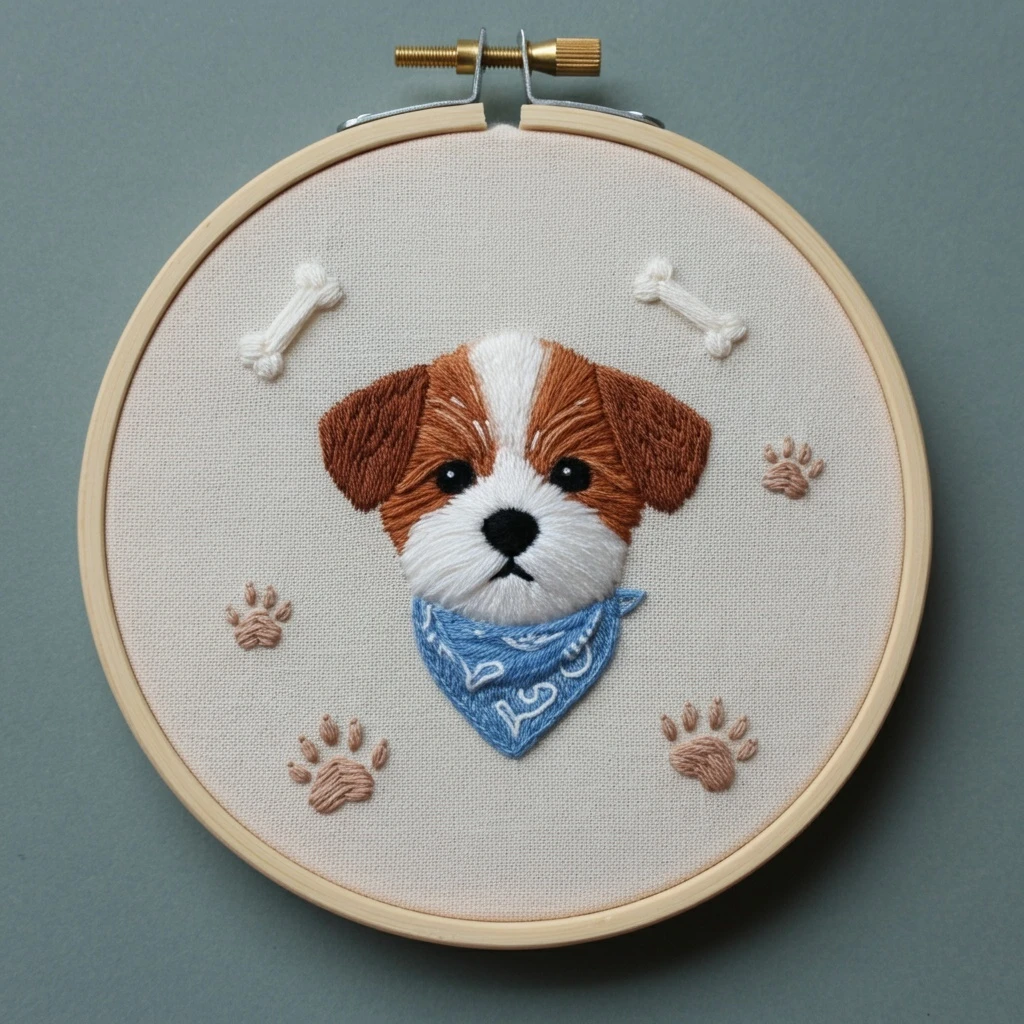
Celestial Blossom Comet
This celestial floral design blends the motion of a comet with soft blossom petals, sparkling star accents, and a dreamy night-sky trail. The embroidery should feel graceful and luminous: a clear sweeping comet path, layered florals at the focal point, tiny golden stars, and gentle blue-lavender shading that suggests cosmic movement without overwhelming the blossoms.
Polished DMC Color Palette
This palette combines dusty rose and blush florals with moonlit cream, warm gold sparkle, deep plum shadows, and cool blue-lavender comet tones. Use the darkest colors sparingly for definition, and let the pale creams and golds create the celestial glow.
Stitch Map by Design Element
Thread Count & Blending Guide
Fine celestial linework
Use 1 strand for star rays, comet-tail edges, tiny dots, petal outlines, small stems, and final sparkle highlights. One strand keeps the celestial details delicate.
Main floral fills
Use 2 strands for blossom petals, comet body fills, larger leaves, and visible trail segments. Two strands provide smooth coverage while still allowing blended shading.
Raised centers
Use 2–3 strands for French knots in flower centers and prominent stars. Three strands works for focal knots; two strands is cleaner for tiny background sparkle.
Shading, Outlining & Texture Suggestions
Comet motion
- Keep trail stitches curved and parallel to the comet’s movement.
- Use the brightest shades near the comet head and fade to lavender or blue along the tail.
- Break the trail into short stitch groups so it feels sparkling, not like a heavy rope.
- Add a few small star stitches just outside the curve to suggest drifting cosmic dust.
Blossom depth
- Shade petals darkest at the center and lightest at the outer tips.
- Use 3716 sparingly so the pale highlights stay special.
- Angle stitches toward the flower center to create natural petal direction.
- Use 154 or 3721 only in tiny creases where petals overlap.
Celestial sparkle
- Vary star sizes with knots, straight stitches, and tiny crosses.
- Place gold near the comet and cream on the brightest points.
- Use blue and lavender dots for cooler background sparkle.
- Leave open fabric between sparkle clusters so the design stays airy.
Outlining approach
- Use split stitch for petal curves and stem stitch for the comet’s main sweep.
- Outline after filling so petals and comet lines stay crisp.
- Use darker shades from the same color family rather than black-heavy outlines.
- Reserve 3799 for the tiniest high-contrast definition only.
Beginner-Friendly Stitching Order
- Transfer the main movement: mark the comet head, curved trail, largest blossoms, flower centers, and a few key stars. Add tiny dots freehand at the end.
- Stitch the comet trail: establish the sweeping curve first so all blossoms and sparkles relate to the motion.
- Fill the comet head: build from warm gold to pale cream, then add cool edge stitches to blend into the trail.
- Work blossoms: stitch petal bases first, then mid-tones, then pale tips and centers.
- Add leaves or sprigs: keep greens muted and place them behind the floral forms.
- Finish with stars: add knots, tiny crosses, seed stitches, and final highlights last so the sparkle sits cleanly on top.
Practical Tips for a Clean Finish
Fabric & hoop
Warm cream cotton, linen, or cotton-linen makes rose petals and golden stars glow. Keep the hoop drum-tight so long comet stitches and satin petals remain smooth.
Needle choice
Use a sharp embroidery needle size 7–9 for one- and two-strand details. For three-strand French knots, use a slightly larger needle so the knots pull through without puckering the fabric.
Keeping the trail elegant
Do not over-thicken the comet tail. If the sweep feels too heavy, add small broken highlight stitches beside it instead of adding another full line.
Balancing flowers and stars
After the blossoms are complete, add stars gradually. The celestial details should frame the florals and movement, not cover every open space.