
DMC Palette & Stitching Notes
Classic Spring Shade Tree
A fresh botanical hoop design with a full green canopy, warm brown branching trunk, and simple spring grass beneath the tree.
Preview
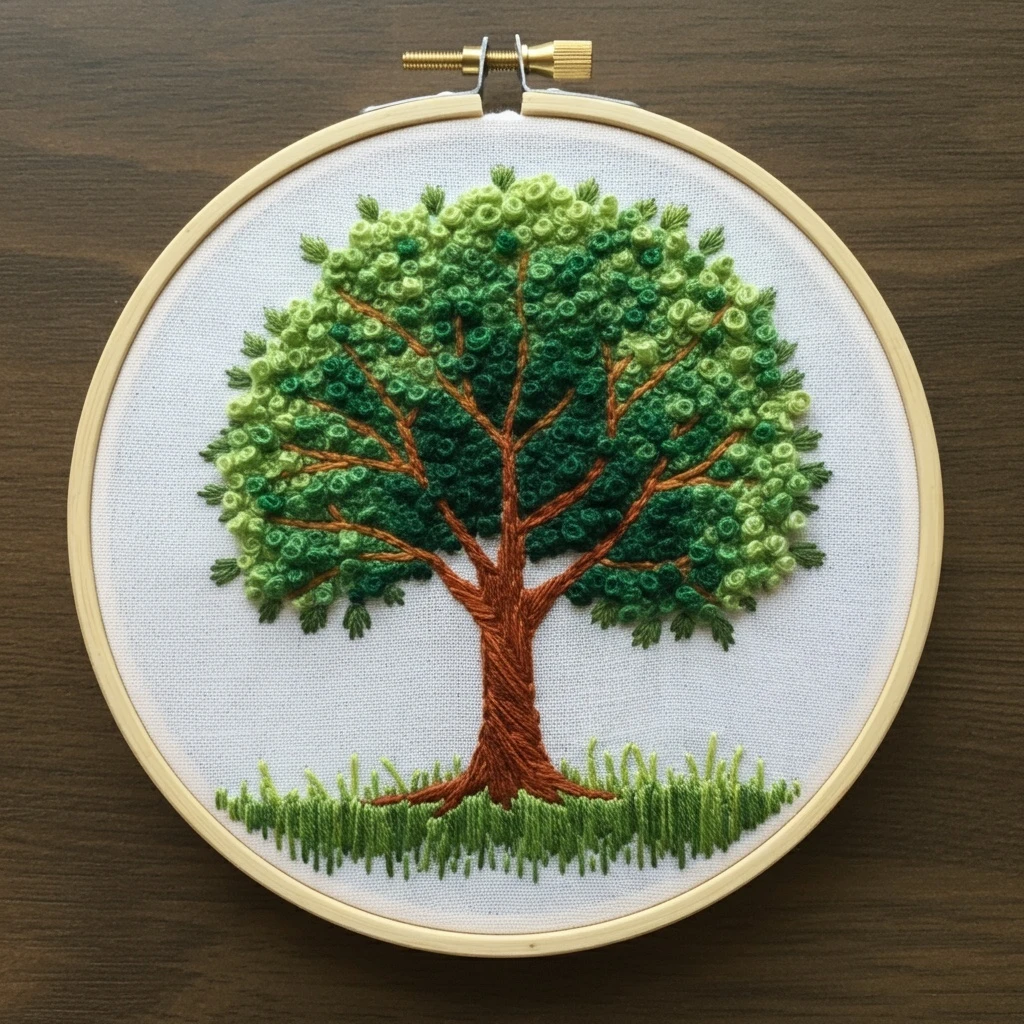
This visible design centers on a broad, rounded green tree stitched inside a hoop. The canopy appears dense and textured, with many small looped or knotted leaf clusters in several greens. The trunk and branches are warm reddish-brown, spreading upward through the foliage, while short vertical grass stitches ground the base.
Color note: The DMC shades and coverage percentages below are close visual estimates from the preview image only. They are not exact thread-usage measurements and may need adjusting to match your fabric, lighting, and personal thread collection.
Likely DMC Color Palette
The palette is built around fresh spring greens, darker shaded foliage, and warm bark tones. Percentages are visual estimates based on the apparent stitched area in the preview.
| DMC | Approx. Hex | Official-style Thread Name | Est. Coverage | Where It Appears |
|---|---|---|---|---|
| 890 | #004B2B | Ultra Dark Pistachio Green | 22% | Deepest shaded areas inside the canopy, especially the lower center and dense leaf clusters behind the branches. |
| 987 | #0B6F3A | Dark Forest Green | 18% | Mid-to-dark foliage around the inner canopy, outer leaf shadows, and some grass accents. |
| 905 | #5F9F3D | Dark Parrot Green | 16% | Medium green leaves across the main canopy and the taller grass blades at the base. |
| 907 | #8CC95D | Light Parrot Green | 14% | Bright spring highlights around the top and side edges of the leafy crown. |
| 704 | #B8D86F | Bright Chartreuse | 10% | Pale yellow-green leaf loops that catch the light along the upper canopy and outer rim. |
| 904 | #3D6B2A | Very Dark Parrot Green | 8% | Small leafy tufts extending beyond the canopy and darker grass strokes along the lower edge. |
| 921 | #8A3F20 | Copper | 7% | Warm highlights on the trunk, roots, and branching limbs. |
| 898 | #5A2B1B | Very Dark Coffee Brown | 5% | Dark bark definition, branch undersides, trunk grooves, and root shadow lines. |
Stitching Suggestions
This design benefits from layered texture: keep the bark directional, the canopy rounded and lively, and the grass loose enough to feel natural.
Rounded Leaf Canopy
Recommended stitches: French knots, colonial knots, detached chain, or small looped lazy daisy stitches.
Work the darkest greens first in the center and lower canopy, then scatter medium and light greens over the top. Avoid placing highlights in perfect rows; a slightly irregular spread will make the tree feel fuller.
Outer Leaf Tufts
Recommended stitches: Lazy daisy, fly stitch, or short straight stitches.
Use darker and medium greens for the small leafy bursts around the canopy edge. Point stitches outward from the crown so the silhouette stays soft and leafy.
Trunk, Branches & Roots
Recommended stitches: Stem stitch, split stitch, back stitch, or long-and-short stitch.
Follow the curve of the trunk with vertical, slightly angled stitches. Blend copper and dark brown in narrow bands to suggest bark ridges without making the trunk too heavy.
Spring Grass Base
Recommended stitches: Straight stitch, seed stitch, and occasional fly stitch.
Use varied stitch lengths, especially along the bottom edge. A mix of dark, medium, and bright greens gives the grass a fresh spring look while keeping it simple.
Where to Start
- Begin with the trunk and largest branches so the tree structure is clear before adding dense foliage.
- Add the darkest canopy stitches next, concentrating them through the center and lower crown.
- Layer medium greens around the dark areas, then finish the canopy with lighter chartreuse highlights near the upper and outer edges.
- Stitch the grass last, varying the height of the straight stitches so the base looks natural rather than like a border.
Helpful Notes
For Texture
Use two strands for most foliage knots or loops if you want the canopy to look plush. For smaller hoops or finer fabric, one strand will keep the leaf clusters more delicate.
For Depth
Keep the darkest greens tucked behind the branches and under the canopy. Let the lightest greens sit on the top and outside edge, where the tree would naturally catch more light.
Thread Substitutions
If you do not have the exact DMC shades listed, choose a similar range with at least one very dark green, one middle leaf green, one bright spring green, one yellow-green highlight, and two warm browns for bark. The value contrast matters more than matching every number perfectly.
Encouraging Finish
This is a friendly design for practicing layered texture. The canopy does not need to be perfectly symmetrical, and the small differences between leaf knots will make the finished tree feel more alive. Work slowly around the branches, step back often, and let the greens build into a soft spring crown.
Once the grass is added, the whole piece should feel grounded, bright, and fresh — a classic little tree hoop with plenty of handmade charm.