
DMC palette & embroidery guide
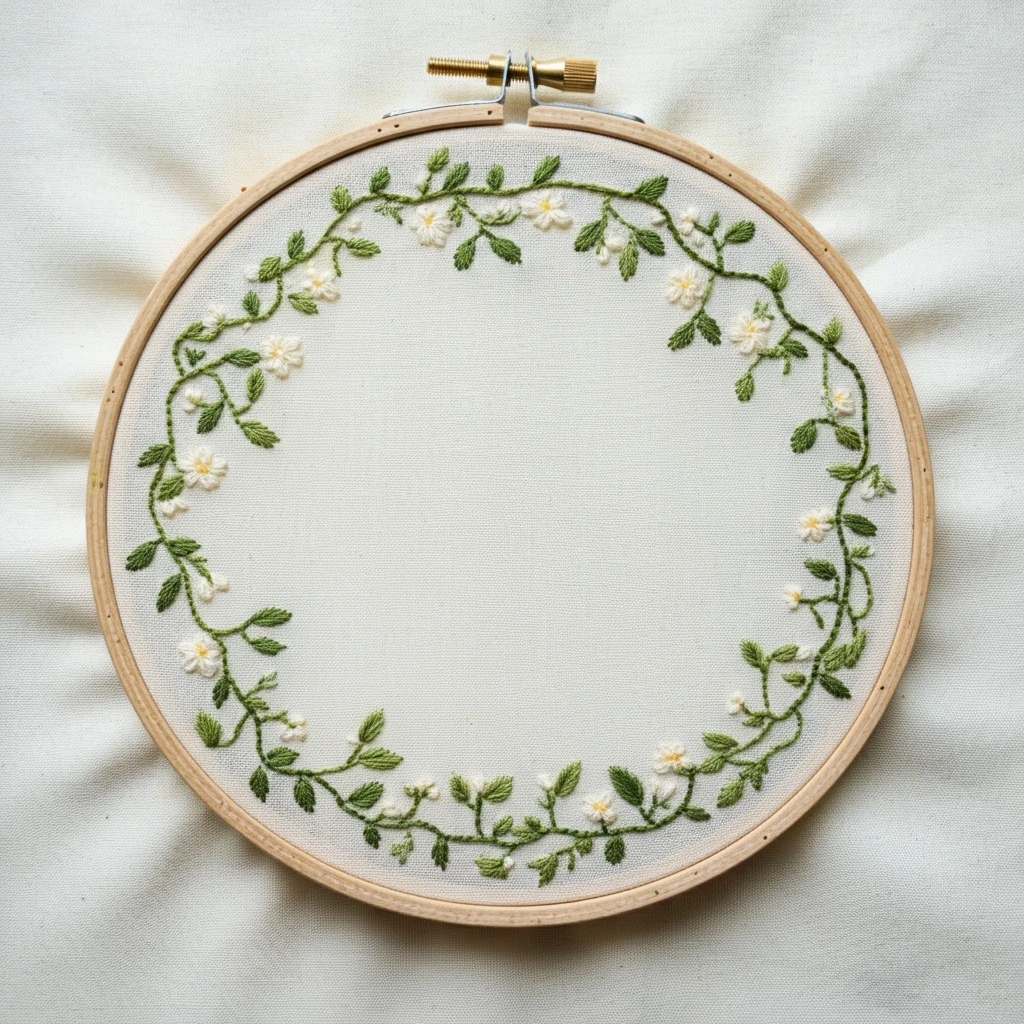
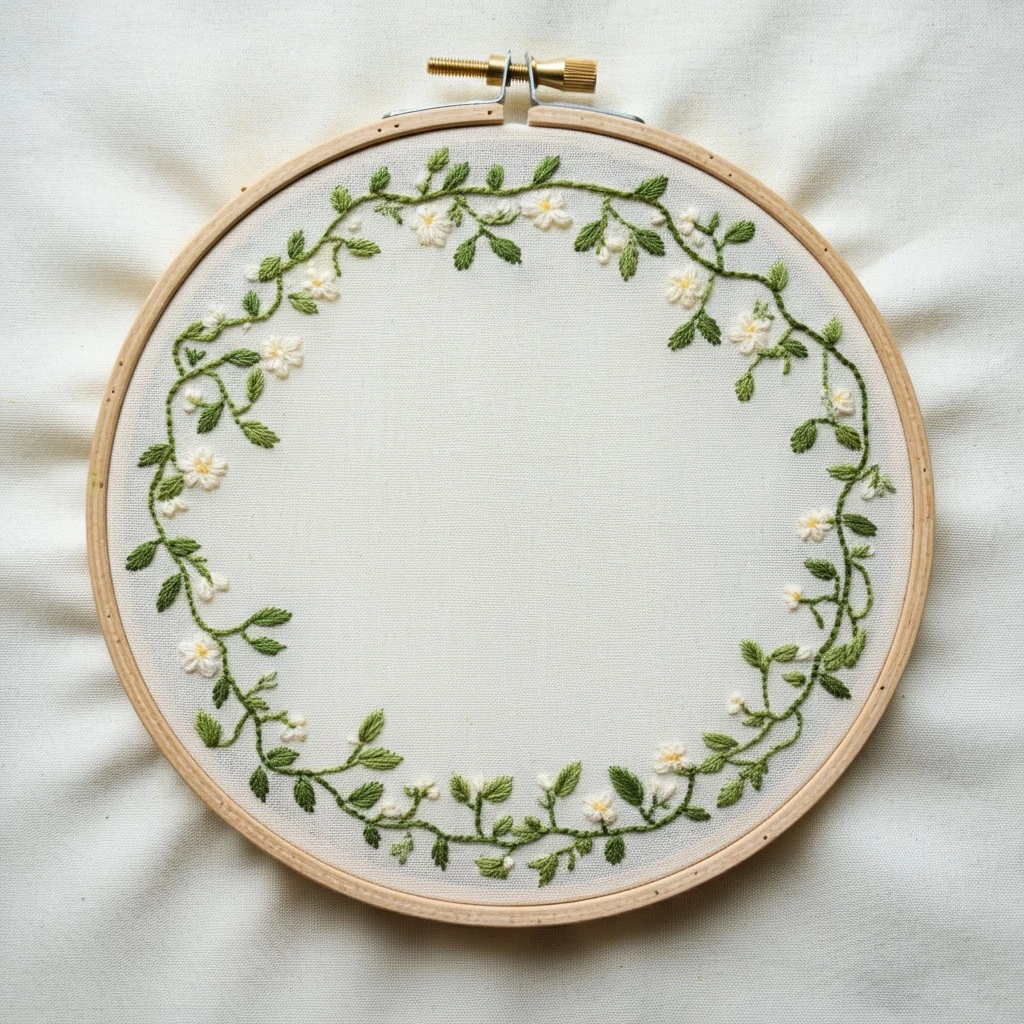
Delicate Vine Wreath
A soft botanical wreath built from fine curling vines, airy leaves, and tiny accent buds. The look is graceful and restrained, so the stitching should stay light: slim stems, softly varied greens, and just enough blush or cream to keep the circular design fresh.
Suggested DMC floss palette
These colors balance the pale vine-wreath mood: cool sage for young leaves, olive and moss for structure, a darker green for depth, warm tan for woody stems, and gentle blush or cream accents for tiny buds and open highlights.
Primary pale leaf color; ideal for small detached leaves and soft outer sprigs.
Muted sage transition shade for alternating leaves and subtle shadow sides.
Olive midtone for the main vine rhythm and fuller leaf centers.
Use sparingly at leaf bases, crossings, and the inner curve of the wreath.
Deep accent for tiny shaded tips and occasional anchoring stitches.
Woody undertone for the thinnest stem line where the wreath needs warmth.
Quiet blush for tiny buds, berry dots, or a few optional floral knots.
Soft highlight for pale seed dots, light bud centers, and gentle leaf glints.
Stitch plan by design element
Keep the wreath elegant by changing stitch direction often, but not overfilling. The best effect comes from a clean circular vine line with small textured leaf clusters that look hand-drawn.
| Element | Recommended stitches | Thread count | Practical notes |
|---|---|---|---|
| Main curling vine | Stem stitch or split back stitch | 1-2 strands | Use 3012 or 611; rotate the hoop as you stitch so the curve remains smooth. One strand gives the most delicate printed-line effect. |
| Small leaves | Fishbone, lazy daisy, or straight stitch pairs | 2 strands | Alternate 522 and 3053, then add a single 3052 stitch at selected bases for natural shadow. |
| Fine sprigs | Back stitch with tiny straight stitches | 1 strand | Work outward from the vine; keep each branch slightly irregular so the wreath feels botanical, not mechanical. |
| Tiny buds or berries | French knots, colonial knots, or seed stitches | 2 strands | Use 3727 for blush accents and 739 for pale seed dots. Space them lightly so they do not overpower the green wreath. |
| Leaf veins and final accents | Single straight stitch, couching, or tiny split stitch | 1 strand | Add after all leaves are complete; too many veins can make the wreath busy, so highlight only the largest leaves. |
Blending & shading guidance
- Blend one strand of 522 with one strand of 3053 for a softened sage leaf that sits between light and midtone.
- For deeper leaf bases, combine one strand 3052 with one strand 3012 instead of switching to a harsh dark outline.
- Keep 3363 for only a few shadow accents; this prevents the delicate wreath from becoming heavy.
- Use 739 as a tiny highlight, not a filler color. One or two short stitches can suggest light without clutter.
Texture suggestions
- Vary leaf stitch length by 1-2 mm to imitate natural growth around the circle.
- Place French knots in uneven groups of one, three, or five for a hand-gathered wildflower feel.
- Use split stitch on the inner curve of the vine and stem stitch on the outer curve if you want subtle dimensional contrast.
- For a softer finish, avoid satin filling large areas; this design works best with open, airy stitches.
Beginner-friendly working order
A wreath can distort if one side becomes too dense, so stitch in balanced rounds rather than finishing one quadrant completely before moving on.
Step-by-step flow
- Mark the wreath circle lightly and secure the fabric drum-tight in the hoop.
- Stitch the main vine first with 1 strand, keeping the line smooth and continuous.
- Add the largest leaves next, spacing the colors evenly around the wreath.
- Fill in fine sprigs, then finish with blush knots and pale seed details.
- Review from arm's length before adding dark accents; the design should still feel delicate.
Practical tips
- Use a size 7-9 embroidery needle for 1-2 strands so holes remain small.
- Shorten floss lengths to about 14-16 inches to reduce fuzzing on fine botanical lines.
- When stitching mirrored leaves, keep the center vein angle consistent for a tidy wreath silhouette.
- If a knot looks too bold, replace it with two tiny seed stitches for a softer bud.
Best overall approach
Think of this pattern as a drawn vine translated into thread: light outlines, small color shifts, and restrained knots will make the Delicate Vine Wreath look polished without losing its soft handmade charm.