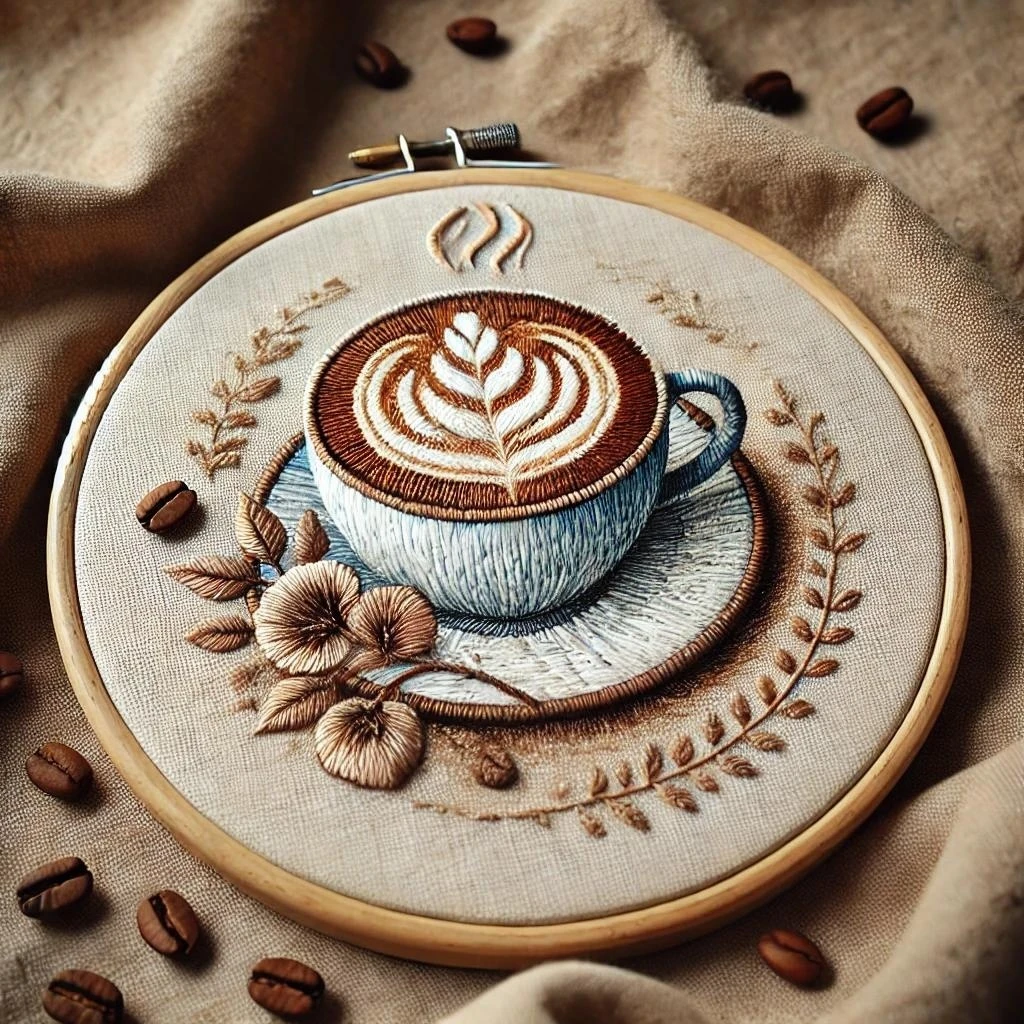

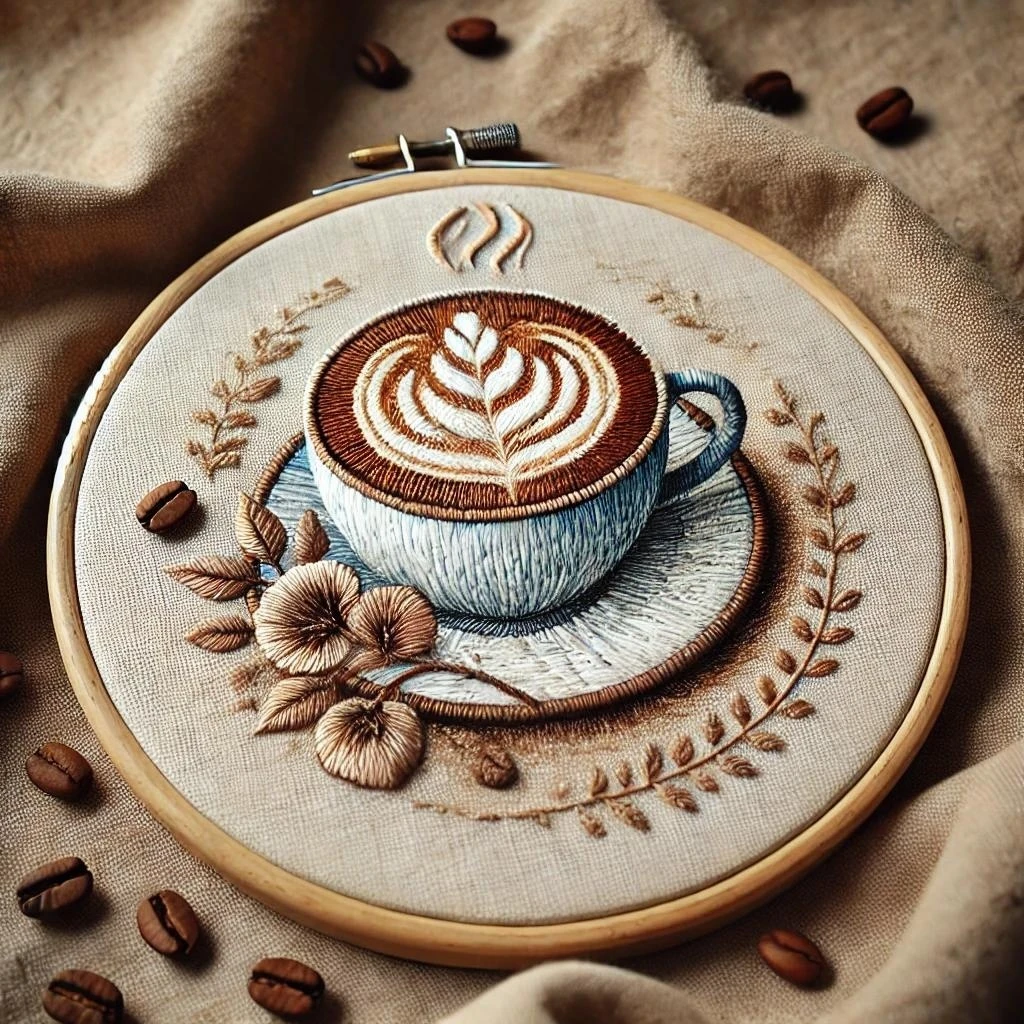
Embroidered Coffee Lattee Art
A cozy coffee embroidery focused on creamy latte art, warm espresso crema, soft porcelain highlights, steam curls, and café-brown shading. These DMC matches are estimated from the visible hoop preview and chosen for a smooth, polished hand-embroidered finish.
Likely DMC Color Palette
Matched to the creamy foam, espresso surface, crema ring, porcelain cup, saucer shadows, steam curls, and subtle coffee-shop warmth.
Stitching Suggestions
Start with the porcelain and coffee base, then add the latte-art design, steam, beans if present, and final bright highlights.
| Element | Stitch Type | Practical Notes |
|---|---|---|
| Latte-art center | Satin stitch | Use 3865 and 739 for the pale art shape. Keep stitches smooth and aligned with the curve of the heart, leaf, or rosetta form. |
| Latte-art outline | Stem stitch or split stitch | Use 738 or 3828 for soft shadow along one side of the white foam shape. Avoid dark outlines that make the design look printed. |
| Coffee surface | Long and short stitch | Blend 738, 436, 3828, and 975 around the art, placing darker tones closer to the cup rim and warmer tones near the crema. |
| Crema ring | Split stitch and seed stitch | Use 3828, 975, and 435 in broken curved strokes. Natural crema should look uneven, not like a perfect border. |
| Cup rim | Whipped backstitch | Backstitch the oval rim with 762 or 739, then whip with 3865 for a raised porcelain lip. Add B5200 on the brightest front edge. |
| Cup body | Long and short stitch | Fill with 3865 and 739, then add 762 and 415 on the shadow side. Follow the cup curve to make it rounded. |
| Cup handle | Satin stitch with backstitch edge | Use 3865 on the outside of the handle, 762 inside the opening, and a tiny 415 or 3031 accent for deepest shadow. |
| Saucer | Long and short stitch | Use 3865, 739, and 762 on the top surface, then shade the lower curve with 415, 436, or 435. |
| Cup-base shadow | Seed stitch and backstitch | Use 3031, 801, or 898 sparingly below the cup to anchor it without darkening the whole piece. |
| Steam curls | Stem stitch or whipped backstitch | Use one strand of 762, 739, or 3865. Keep curves open and airy so the steam feels light. |
| Tiny foam bubbles | French knots | Use 739 and 3865 in one-wrap knots near the latte art. Place only a few so the foam remains smooth. |
| Coffee beans, if included | Padded satin stitch | Use 801 and 898 for the body, 3371 for the groove, and 436 or 738 for tiny roasted highlights. |
| Table texture | Horizontal straight stitch | Use 739, 436, and 435 in short broken lines. Keep the surface subtle so the latte art remains the focal point. |
| Decorative sparkle | Tiny straight stitch | Use 744, 3852, or B5200 very sparingly on the foam and cup highlights for a polished café finish. |
| Final outlines | Single-strand backstitch | Use 3031 only around the cup base, deepest handle shadow, and any bean details. Keep everything else soft and creamy. |
Thread Count, Blending & Texture
Use strand changes to keep the foam smooth, espresso warm, porcelain rounded, and steam airy.
Smooth foam
Use 2 strands for the main foam shape and 1 strand for the final edge. Keep satin stitches parallel within each section of the latte art.
Crema depth
Blend tan, hazelnut, and golden brown in short curved stitches around the foam. A slightly uneven crema ring looks more realistic.
Porcelain shine
Use creamy white as the base, then cool gray shadows on one side. Pure white should be reserved for tiny rim and saucer highlights.
Warm balance
Keep the darkest browns in small accents only. Too much black-brown can overpower the soft latte palette.
Steam softness
One-strand whipped backstitch creates smooth steam curls. Leave space between curls so they feel like vapor, not decoration.
Beginner control
Outline the cup rim lightly before filling the coffee. The oval rim sets the whole perspective, so keep it even and relaxed.
Recommended Stitching Order
This order keeps the latte art centered and protects small highlights from snagging.
Helpful Notes for a Polished Finish
A gentle touch helps this coffee piece feel creamy, cozy, and café-polished.
- Use firm hoop tension; satin stitch on the latte art will show puckering quickly.
- Keep the latte-art stitches smooth and compact, especially around narrow points of a heart or rosetta leaf.
- Use a single strand for rim shadows and steam so the delicate details do not look heavy.
- Do not carry dark brown threads behind pale foam, cup, or saucer areas where they could show through.
- Add only a few foam bubbles. Too many knots can make the latte surface look textured rather than creamy.
- Press the finished hoop face-down on a towel to protect raised rim stitching, French knots, and padded coffee-bean accents.