
Embroidered Rabbit And Floral Wreath
This rabbit and floral wreath design has a soft spring character: a gentle neutral rabbit framed by pink blossoms, leafy greens, small yellow centers, and warm twig accents. The most polished result comes from keeping the rabbit fur subtle and fluffy while letting the wreath carry brighter floral color and crisp botanical texture.
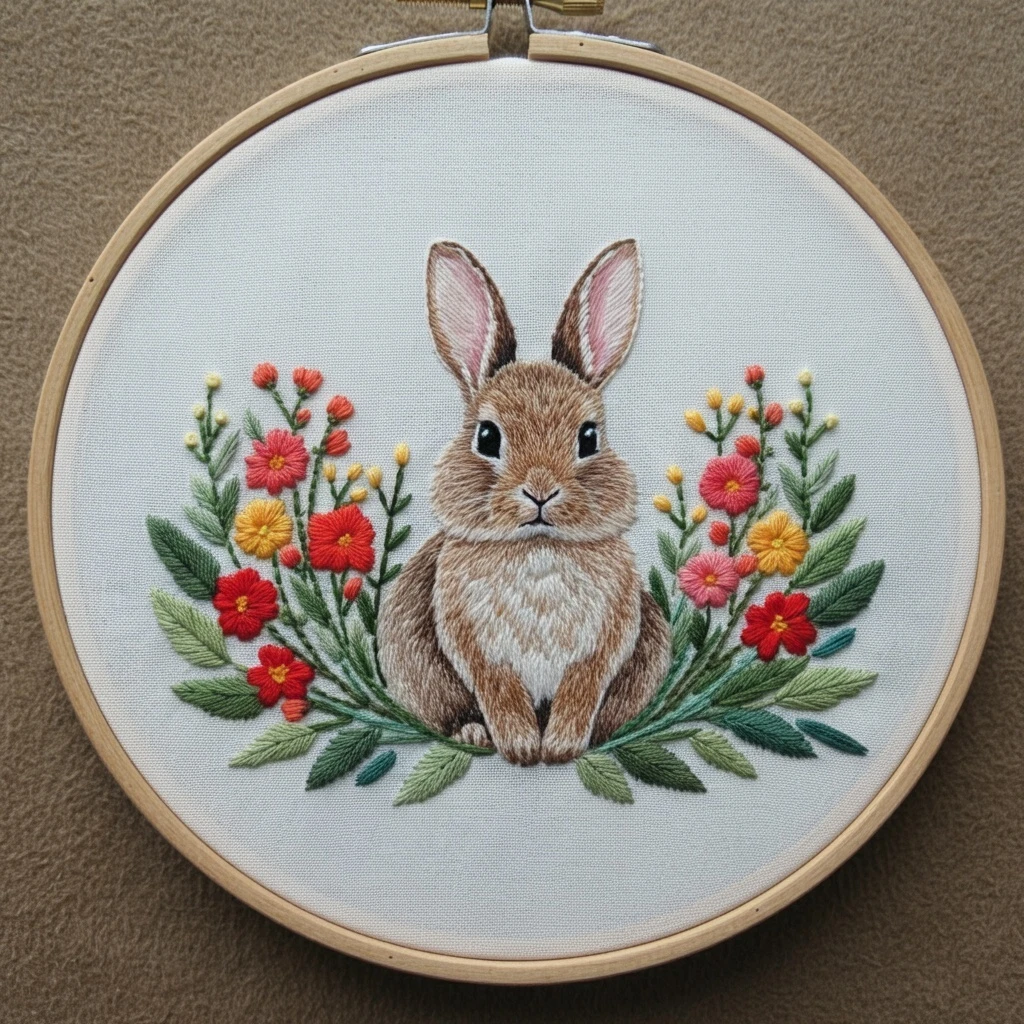
Project snapshot
Build the design from soft animal shapes to botanical details: rabbit fill first, wreath structure second, flowers and tiny accents last.
Suggested DMC color palette
These DMC colors balance soft rabbit fur, warm inner-ear blush, pink flowers, leafy wreath greens, and small golden floral centers.
Recommended stitches by area
- Rabbit fur: Use long and short stitch in short, curved rows. Follow the cheeks, chest, and body curves so the rabbit looks rounded and soft.
- Ears: Use smooth long-and-short or satin shading, with pink tones inside and beige-gray along the outer edge.
- Face details: Use one-strand backstitch or split stitch for the nose and mouth; French knots or tiny satin stitches work well for the eyes.
- Whiskers: Use one strand of B5200, 535, or 642 in long, confident straight stitches. Avoid restitching whiskers repeatedly.
- Flowers: Use lazy daisy, satin stitch, woven wheel, or small detached-chain petals depending on the blossom size.
- Leaves and stems: Use stem stitch for the wreath curve, fishbone stitch for leaves, and tiny straight stitches for sprigs.
Thread-count guidance
- 1 strand: rabbit face, whiskers, eye highlights, tiny flower centers, and delicate leaf veins.
- 2 strands: most outlines, ears, flower petals, leaves, and controlled fur shading.
- 3 strands: larger body fills, fuller flower petals, and thicker wreath stems on a larger hoop.
- 4 strands: optional for raised flower centers or plush rabbit chest texture, but use sparingly.
- Best balance: keep facial details fine and the wreath slightly fuller so the rabbit stays expressive and the frame feels abundant.
Blending ideas
Use gentle value shifts on the rabbit and brighter layered color in the wreath. The rabbit should feel soft, while the flowers add spring detail.
- For rabbit fur, blend B5200 → 3865 → 644 → 642 → 3023, placing the darkest tones under the ears, chin, and paws.
- For facial definition, use 535 and tiny touches of 310 only where strong contrast is needed.
- For inner ears, blend 3865 → 950 → 818 to create a warm but delicate blush.
- For flowers, move from 818 → 761 → 3688, adding 3688 near petal bases or overlapping blossoms.
- For leaves, blend 3348 → 3347 → 3363 → 3051, with darker greens tucked behind flowers and the rabbit.
Outlining and definition
Keep outlines soft around the rabbit and slightly crisper around wreath elements to preserve the handmade woodland look.
- Use 642 or 3023 for most rabbit outlines instead of black.
- Use 535 for tiny facial marks, paw separations, and the deepest ear edge shadows.
- Use 310 only for eye centers or very tiny high-contrast details.
- Use 3363 or 3051 for leaves and stems, especially where they sit behind flowers.
- Use broken backstitch around the wreath curve to keep it organic rather than perfectly rigid.
Shading and texture guide
| Area | Color handling | Texture suggestion |
|---|---|---|
| Rabbit face and body | Use 3865 and 644 as the main fur, with 642 and 3023 along lower curves and under overlaps. | Short curved long-and-short stitches create a fluffy but tidy fur texture. |
| Inner ears | Blend 950 and 818 lightly, keeping the center warm and the outer ear edge neutral. | Smooth satin or long-and-short stitches keep the ears soft and delicate. |
| Eyes and nose | Use 310 only for the darkest point, then B5200 for a tiny highlight if the design scale allows. | One French knot or tiny satin stitch per eye is often enough. |
| Pink flowers | Use 818 for light petals, 761 for mid-tone petals, and 3688 for shadowed petal bases. | Lazy daisy petals and woven wheels create quick, charming floral texture. |
| Leaves and wreath stems | Use 3348 on light leaf tips, 3347 as the main green, 3363 and 3051 for shaded leaves behind the flowers. | Fishbone leaves and stem stitch vines create a neat wreath frame. |
| Flower centers and twigs | Use 745 and 3820 for centers; use 433 for twig accents and natural wreath structure. | French knots make quick pollen dots, while stem stitch gives twig curves a clean finish. |
Suggested stitching order
Beginner-friendly practical tips
- Use a pale transfer method around the rabbit so dark guide lines do not show through light fur stitches.
- Keep fur stitches short and slightly varied. Long straight stitches can make the rabbit look smooth rather than fluffy.
- Stitch both eyes in the same sitting so their size and placement match.
- For whiskers, make one clean stitch per whisker and avoid pulling too tight, which can distort the fabric.
- Scatter flower colors around the wreath instead of grouping all dark pinks in one area.
- If the wreath looks crowded, remove a few leaves rather than making the rabbit smaller or darker.
- Step back before final outlining. Add definition only where the rabbit or flowers need help separating from the fabric.