
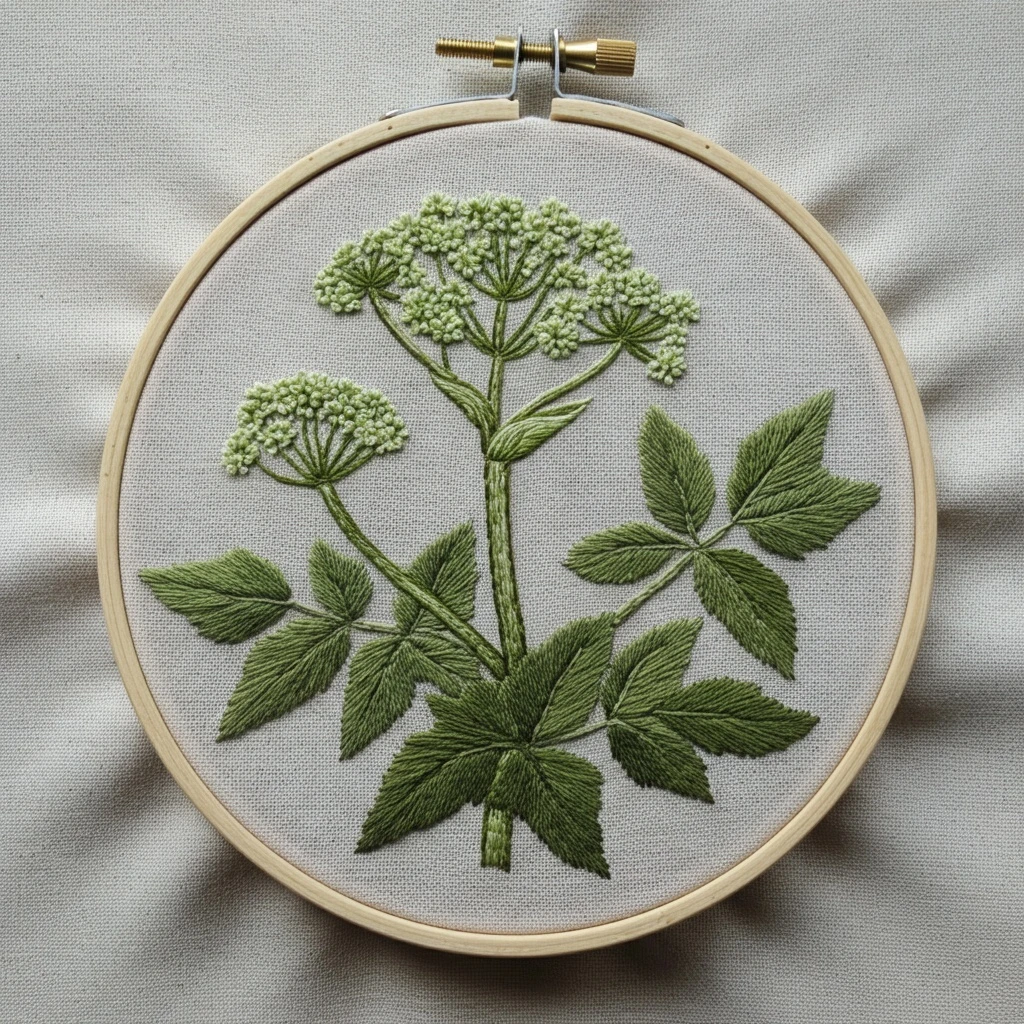
Embroidered Wildflower In Hoop
A warm, textured wildflower study with gathered stems, dusty rose and rust blooms, mustard knot clusters, olive foliage, and soft cream fabric inside a natural wooden hoop. Colors are visually estimated from the preview and matched to practical DMC embroidery floss shades.
Likely DMC Color Palette
Built around olive stems, sage seed heads, rusty flower clusters, mustard accents, blush petals, cream highlights, and the warm wood hoop.
Deepest stems, tied lower stem bundle, dark leaf bases, and small shadow lines that keep the bouquet grounded.
Approx. 14%Main stem color, leafy branches, and darker straight-stitch greenery between the flowers.
Approx. 16%Soft sage seed heads, round knot clusters, and lighter foliage tips where the design needs an airy meadow feel.
Approx. 12%Highlights on ferny sprigs, secondary leaves, and tiny stitches placed over darker greens for dimension.
Approx. 8%Rusty red flower clusters and deeper petals; excellent for small satin stitches or dense French-knot blooms.
Approx. 11%Warm petal tips, rust flower highlights, and small connecting stitches in the reddish-orange blossoms.
Approx. 7%Mustard French knots, tiny pollen dots, and the golden center of woven or radiating flowers.
Approx. 8%Soft golden highlights on small buds, seed dots, and the outer turns of the round mustard bloom.
Approx. 6%Dusty rose petals, muted pink blossoms, and subtle bridging stitches where pink meets brown or cream.
Approx. 7%Blush highlights on pink petals and soft flower tips; use sparingly so the design stays naturally muted.
Approx. 4%Tiny white blossoms, cottony knot clusters, petal sparkle, and lifted highlights against natural linen.
Approx. 5%Optional hoop-colored accents, neutral seed stems, and warm beige touches that echo the wooden frame.
Approx. 2%Stitching Suggestions
Use a loose botanical rhythm: tall slim stems first, then textured blooms, then small accent knots and leaf stitches.
| Element | Stitch type | Practical notes |
|---|---|---|
| Main stems | Stem stitch or split stitch | Use 1 strand for fine stems and 2 strands for the darker lower bundle. Keep curves relaxed rather than perfectly straight. |
| Rust flower clusters | French knots, colonial knots, or short satin stitches | Work DMC 3777 first, then add DMC 922 on one side of the cluster so the blossoms look sunlit. |
| Round mustard bloom | Woven wheel, whipped spider wheel, or tight satin fan | Begin with DMC 783 near the center and add DMC 729 around the outer rim for a softer, dimensional flower head. |
| Dusty rose petals | Long and short stitch or fishbone stitch | Blend DMC 407 with DMC 353 on the petal tips. Directional stitches should radiate from the flower base. |
| Sage seed heads | Detached chain, bullion knots, or padded satin stitch | Use DMC 3052 for the base and a few DMC 3053 stitches over the top; vary lengths so the seed heads feel organic. |
| Leaves | Fishbone stitch, straight stitch, or lazy daisy | Dark leaves look best with 2 strands of DMC 3362, then a single DMC 934 center vein for crisp definition. |
| White filler blooms | French knots and tiny straight stitches | Use DMC 3865 with 1 or 2 wraps. Scatter the knots unevenly to avoid a dotted, mechanical look. |
| Tied stem base | Couching, wrapped backstitch, or satin stitches | Dark green or beige-brown wrapping gives the bouquet a gathered-handful finish without adding bulk. |
Thread Count & Texture
- 1 strand: fine stems, hairline greenery, tiny white flower sprigs, and delicate outlines.
- 2 strands: most petals, leaves, seed heads, and medium stems. This is the safest default for beginners.
- 3 strands: only for plump French-knot flower heads or the round woven bloom if your fabric weave can support it.
- Needle choice: use a sharp embroidery needle for linen or cotton; switch to a slightly larger eye when stitching with 3 strands.
Blending & Shading
Muted greens
Pair one strand of DMC 3362 with one strand of DMC 3052 for natural mixed stems. Add single-strand DMC 934 only where leaves overlap or need shadow.
Rust blossoms
For small blooms, stitch dark terra cotta first and place copper highlights only at the upper or outer edge. Too much copper can make the cluster look flat.
Soft rose petals
Alternate DMC 407 and DMC 353 in long-and-short rows. Let the peach shade sit at petal tips and the dusty shade sit near the stem.
Beginner-Friendly Order of Work
Starting with the structure keeps the bouquet balanced and prevents textured knots from catching your thread too early.
- Transfer the pattern lightly and mount the fabric drum-tight in the hoop; re-tighten after the first few stems.
- Stitch the main stems from bottom to top with 1 strand, then thicken only the central stems with a second pass.
- Add larger leaves and sage seed heads next, using directional stitches that follow the plant shape.
- Work the main rust, mustard, and rose flowers before the tiny filler blooms so the focal colors stay balanced.
- Finish with French knots, white highlights, small pollen dots, and any dark outline accents.
- Steam or block from the back only; avoid pressing directly onto knots, woven wheels, or padded stitches.
Outlining Details
Keep outlines selective. A full black outline would overpower this soft wildflower style, so use DMC 934 or 3362 only under leaves, along the lower sides of stems, and in the deepest folds of pink or rust flowers. Backstitch with 1 strand when a petal needs a clean edge; split stitch if you want a softer, slightly fuzzy botanical contour.
Hoop Finish Notes
Because the design sits on pale linen with a warm wood hoop, leave generous breathing room around the bouquet. Trim thread tails carefully behind light fabric, lace the back rather than gluing bulky fabric, and consider a neutral felt backing so the finish looks clean from every angle.