
Embroidered Wine Glass And Grapes Hoop Art

Embroidered Wine Glass And Grapes Hoop Art - DMC Palette & Stitching Tips

Embroidered Wine Glass And Grapes Hoop Art

A polished DMC palette and stitching guide for a cozy wine-themed hoop: deep burgundy wine, glossy grape clusters, delicate glass highlights, curling vine tendrils, a textured cork, and a soft tabletop ground.

DMC Palette · Wine & Vineyard Hoop
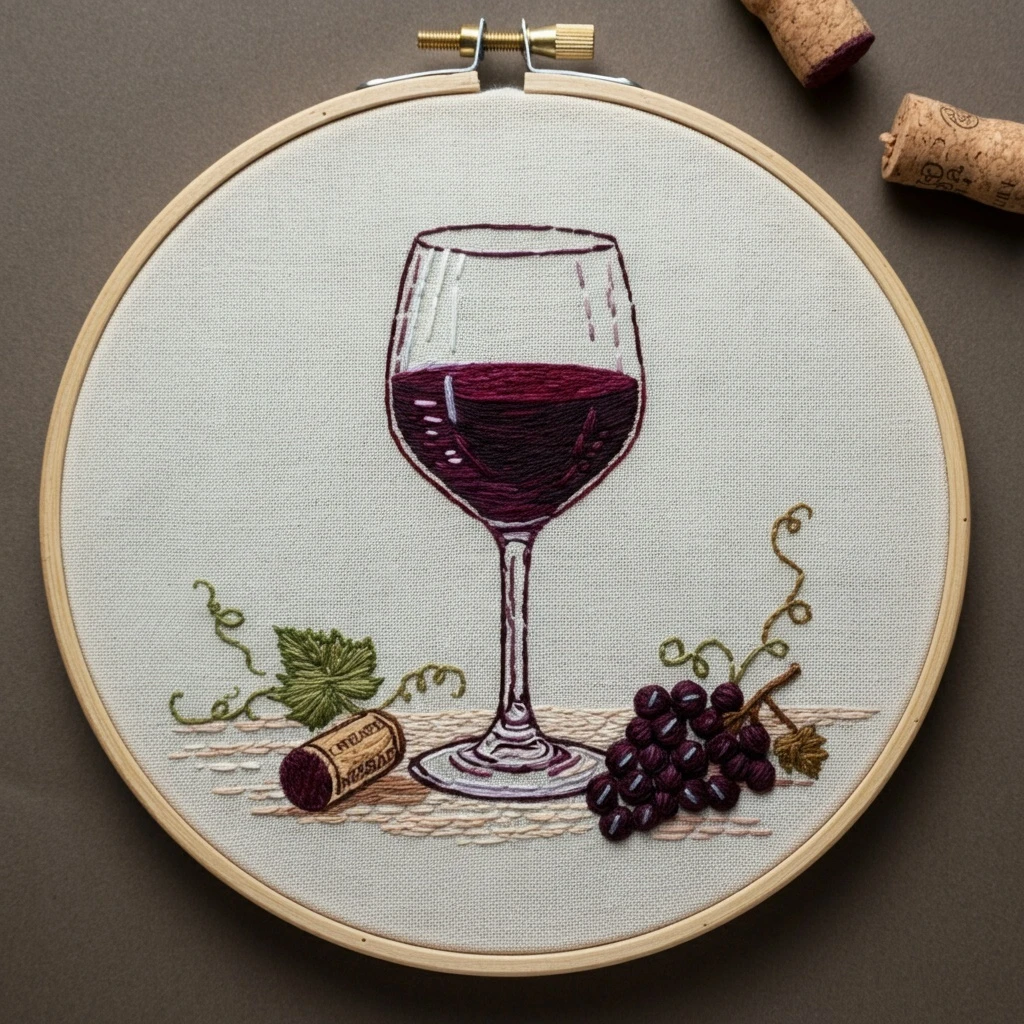
Embroidered Wine Glass and Grapes Hoop Art

Preview image from the linked hoop-art sample. Colors below are visual estimates matched to close DMC embroidery floss shades.

Design Color Read

The composition is anchored by a tall outlined wine glass filled with rich red wine. The darkest values sit in the lower wine bowl and in the grape cluster, while the glass rim, stem, and base rely on fine burgundy outlines plus pale gray-white highlights to suggest transparency.

At the bottom, the grape bunch adds raised, glossy texture in plum and black-purple tones. Olive green leaves and curling tendrils soften the right and left sides, and a cork with warm tan-brown lettering balances the palette. A lightly stitched beige tabletop gives the design a grounded, handmade finish without competing with the wine and grapes.

Best Overall Thread Approach

Use 2 strands for most filled areas, 1 strand for glass lines and tendril details, and 3 strands only where you want the grape knots or cork end to feel extra raised. Keep the glass airy: the negative fabric space is part of the sparkle.

Likely DMC Color Palette

Palette based on the visible wine surface, grape bunch, glass outline, cork, olive foliage, vine spirals, and neutral stitched table texture. Coverage percentages are visual estimates, not exact thread usage.

814
DMC 814
Garnet Dark
Primary wine fill, grape shadows, darkest burgundy outlines inside the bowl.
18% coverage
154
DMC 154
Grape Very Dark
Deepest grape undersides, wine base shadow, small accents where berries overlap.
14% coverage
915
DMC 915
Plum Dark
Mid-tone grape rounds, wine surface shimmer, curved strokes on the glass bowl.
10% coverage
3685
DMC 3685
Mauve Dark
Soft wine highlights, lifted grape glints, blush reflections around the base.
6% coverage
3865
DMC 3865
Winter White
Bright glass glints, small reflected dots on grapes, crisp rim highlights.
7% coverage
762
DMC 762
Pearl Gray Very Light
Subtle glass contour, pale stem shading, transparent base rings.
6% coverage
414
DMC 414
Steel Gray Dark
Thin shadow strokes on the wine glass, foot underside, and glass edge depth.
4% coverage
3052
DMC 3052
Green Gray Medium
Main vine tendrils, leaf veins, muted vineyard greenery.
8% coverage
3051
DMC 3051
Green Gray Dark
Leaf shadows, darker grape stems, lower edges of the stitched greenery.
7% coverage
729
DMC 729
Old Gold Medium
Golden vine curls, warm seed-like knots, aged cork markings.
5% coverage
842
DMC 842
Beige Brown Very Light
Cork body, tabletop strokes, soft woven ground under the glass.
9% coverage
839
DMC 839
Beige Brown Dark
Cork outline, branch/stem lines, lettering texture, grapevine shadows.
6% coverage

Stitching Suggestions

Wine fill: long and short stitchWork the wine horizontally and slightly curved so it follows the glass bowl. Blend DMC 814 into 154 at the bottom, then add a few 915 and 3685 strokes near the top edge for a liquid sheen.
Wine surface: split stitch or stem stitchUse DMC 814 for the dark oval line at the top of the wine. Keep the line slightly uneven rather than perfectly flat so it looks like embroidered liquid, not a printed border.
Glass outline: 1-strand backstitchOutline the bowl, rim, stem, and base with one strand of dark burgundy or gray-burgundy. Leave open gaps and use pale gray-white highlights so the glass stays light and transparent.
Glass highlights: straight stitchesAdd short vertical stitches in DMC 3865 and 762 on the left side of the bowl and down the stem. Use very few stitches; too many will make the glass look cloudy.
Grapes: padded satin or woven wheel dotsFor smooth berries, pad each grape with one small under-stitch, then satin stitch over it with 915 or 814. Add 154 on the lower edge and one tiny 3865/3685 glint on the upper curve.
Raised grape texture: French knotsFor a more dimensional bunch, use 2-wrap French knots with 2 strands. Mix 154, 814, and 915 randomly so the cluster looks natural and shaded.
Leaves: fishbone stitchStitch the left leaf with fishbone stitch in 3052, adding 3051 at the base and under-folds. A few straight stitches in the same direction make the leaf appear veined and slightly rough.
Vine curls: stem stitch and couchingUse one strand for narrow curling tendrils. For larger spirals, couch a laid strand of 729 or 3052 with tiny matching stitches to keep the curves smooth.
Cork: satin stitch plus backstitchFill the cork with 842 in short diagonal satin stitches. Outline with 839, then add a few sketchy lettering marks and end rings using 839 or 729.
Tabletop: loose straight stitchesUse scattered horizontal stitches in 842, 3865, and a touch of 839. Keep the stitches broken and uneven so the ground supports the scene without becoming a heavy block.

Thread Count, Blending & Shading Guidance

  • 1 strand: glass contour lines, rim details, inner reflections, vine tips, tiny cork lettering, and fine grape stems.
  • 2 strands: wine fill, grape satin stitch, main leaf shapes, cork body, tabletop texture, and most visible outlines.
  • 3 strands: optional only for raised grapes, cork end cap, or extra-bold knots where you want tactile texture.
  • Blend wine shades: combine one strand 814 with one strand 915 for a smoother mid-burgundy; combine 814 + 154 for the darkest bowl base.
  • Blend greenery: pair 3052 with 3051 for muted leaves, or add a single 729 stitch to warm up curling tendrils.
  • Highlight sparingly: place pale stitches last. A few clean 3865 and 762 accents will read more like glass than a fully filled white area.

Beginner-Friendly Work Order

Transfer the design lightly and mark the wine line, grape cluster, cork angle, and glass stem center so the composition stays balanced.
Stitch the wine glass outlines first with 1 strand. This creates a map for the filled wine and prevents the bowl from losing its shape.
Fill the wine area from the darkest lower section upward. Add the surface line and a few reflection stitches only after the fill is complete.
Work the grapes next, stitching back berries first and front berries last. This layering makes the bunch look stacked and dimensional.
Add leaves, stems, and curling tendrils. Keep these lighter and airier than the grapes so the dark fruit remains the focal point.
Finish with cork details, tabletop texture, glass highlights, and tiny white glints. These last accents give the hoop its polished look.

Practical Embroidery Tips

Use a tightly hooped neutral linen or cotton-linen fabric so the long glass stem stays straight. When stitching the wine and grapes, separate your floss strands before recombining them; this keeps satin stitches smoother and reduces rope-like twisting.

For clean grape edges, stitch each grape as its own small oval rather than filling the whole bunch at once. For the wine glass, resist filling all the pale glass areas. The open fabric is what gives the illusion of transparency, while the burgundy outline and gray-white glints provide just enough structure.

If the hoop begins to feel too dark, add only two or three extra highlights: one on the wine surface, one on the left side of the glass bowl, and one on the front grape. Small, intentional sparkle is more convincing than many scattered bright stitches.

Designed as a close visual DMC match for the provided preview image. Adjust thread choices slightly for your fabric color, lighting, and personal stitching style.

Leave a Reply

Your email address will not be published. Required fields are marked *