
Pastoral Windmill Scene
A soft countryside embroidery plan with airy sky blues, warm cream windmill sails, weathered wood, meadow greens, a curved path, and tiny wildflower accents.
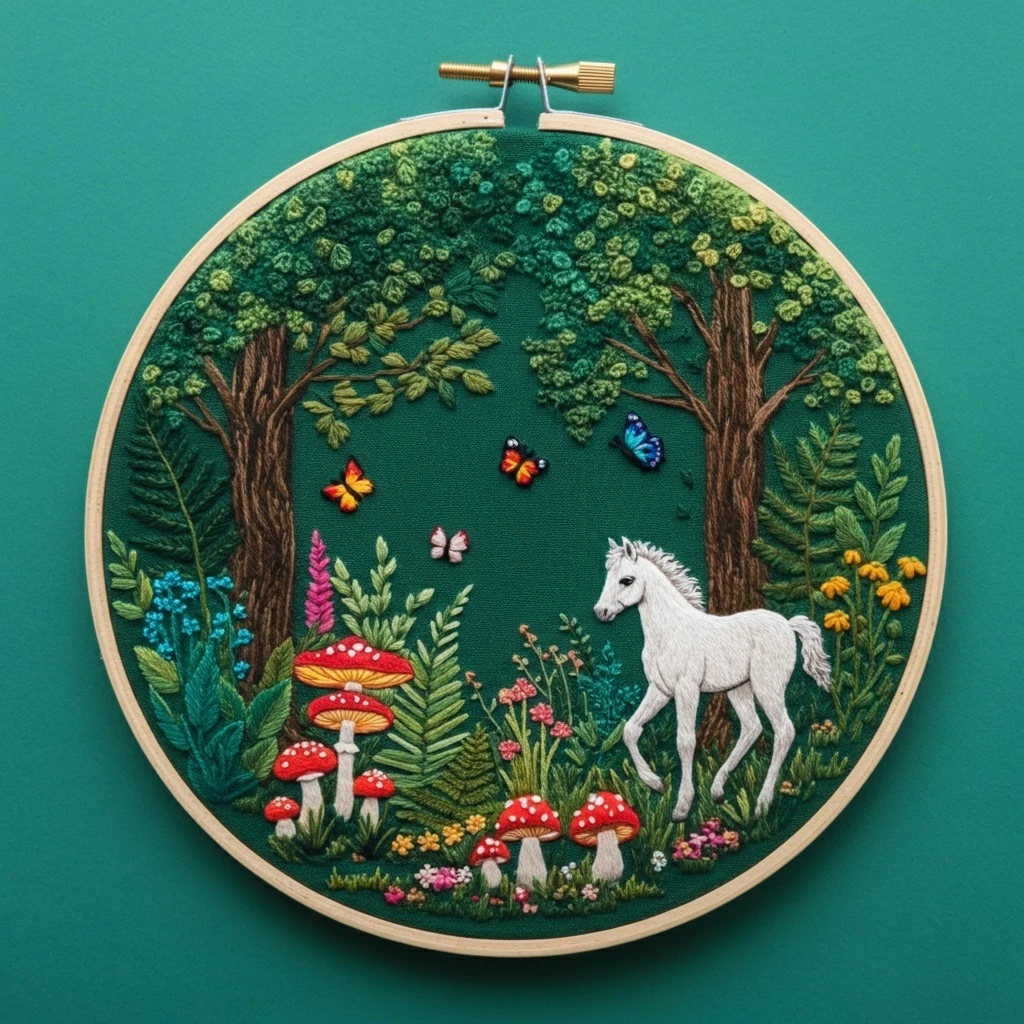
Design read
This composition works best as a calm hoop scene: the windmill is the quiet focal point, framed by sloping meadow grasses, pale sky, small blossoms, and rustic natural textures. Keep the palette low-contrast and pastoral so the mill, path, and flower details feel sunlit rather than stark.
Prioritize smooth directional stitches for the sails and sky, textured broken stitches for foliage, and fine one-strand outlines for architectural edges. The mood should be delicate, handmade, and lightly shaded.
Suggested DMC floss palette
The palette below balances pastel atmosphere with enough deeper tones for crisp windmill definition, tree bark, and foreground texture. Use the darker shades sparingly; they are accents, not dominant colors.
DMC 3753 - Ultra Very Light Antique Blue
Soft sky wash, distant haze, and the lightest cool highlights on clouds.
DMC 3752 - Very Light Antique Blue
Sky depth near the upper hoop and subtle shadow below clouds.
DMC 3865 - Winter White
Windmill sail highlights, cloud tops, and tiny sparkle stitches on flowers.
DMC 712 - Cream
Warm sail fabric, sunlit mill walls, and blended cream highlights.
DMC 738 - Very Light Tan
Mill wall shading, path highlights, and dry grass touches.
DMC 842 - Very Light Beige Brown
Soft shadow under rooflines, sail folds, and path mid-tones.
DMC 433 - Medium Brown
Weathered timber, fence rails, trunks, and warm bark streaks.
DMC 938 - Ultra Dark Coffee Brown
Tiny architectural outlines, deepest wood cracks, and door/window accents.
DMC 3363 - Medium Pine Green
Main meadow grass, leafy stems, and middle-distance shrubs.
DMC 3052 - Medium Green Gray
Muted foliage, shadowed grasses, and soft blending with linen backgrounds.
DMC 3013 - Light Khaki Green
Sunlit grass tips, distant leaves, and pale seed-head stitches.
DMC 3345 - Dark Hunter Green
Foreground grass shadows and deep plant bases for dimension.
DMC 744 - Pale Yellow
Wildflower centers, sunny field dots, and soft highlights on dry stems.
DMC 3708 - Light Melon
Pink meadow blossoms, tiny bud clusters, and gentle cottage-garden accents.
DMC 209 - Dark Lavender
Lavender flower sprigs and cool contrast in the foreground border.
DMC 644 - Medium Beige Gray
Stone path shadows, sail underside, and subdued cloud bottoms.
Stitch map by design area
Sails, tower, roof, and windows
- Use satin stitch or long-and-short stitch for each sail blade, following the blade direction from hub to tip.
- Blend 3865 with 712 for pale sail faces; add 842 only along lower edges and folds.
- Outline the hub, roof edge, door, and window with one strand of 938 in tiny backstitch or split stitch.
- For timber beams, use stem stitch in 433, then add a few broken 938 stitches for aged wood grain.
Light background atmosphere
- Leave some fabric unstitched if using pale linen; this keeps the hoop soft and breathable.
- Where sky stitching is desired, use one strand of 3753 in widely spaced horizontal seed stitches.
- Clouds can be feather stitch, loose split stitch, or tiny satin dashes in 3865 with 644 underneath.
- Avoid heavy outlines around clouds; use shade changes instead.
Ground texture and perspective
- Work the path first in 738, then add 842 and 644 short horizontal stitches to imply stones and curves.
- Use stem stitch for longer grass blades and straight stitch for short foreground blades.
- Mix 3363, 3052, 3013, and 3345 randomly so the meadow feels natural.
- Keep stitches smaller near the windmill and longer in the foreground to create depth.
Pastel botanical accents
- Use French knots for yellow and pink flower centers: one wrap for tiny distant flowers, two wraps for foreground dots.
- Make lavender sprigs with detached chain or lazy daisy stitches in 209, with 3052 stems.
- Scatter 744 and 3708 sparingly; too many bright dots will distract from the windmill.
- Add a few 3865 pin stitches at the end for fresh sparkle.
Thread-count and strand guidance
| Area | Recommended strands | Practical note |
|---|---|---|
| Fine outlines | 1 strand | Use for windmill window lines, sail edges, roof ridge, and distant fence details. Short stitches look cleaner than long carried lines. |
| Windmill fills | 2 strands | Two strands give smooth coverage without bulk. For tiny patterns under 5 inches, use 1 strand for the sail blades. |
| Meadow grass | 1 to 2 strands | Use 1 strand for fine distant grass; 2 strands for foreground blades and thicker stems. |
| French knots | 1 strand, 1 to 2 wraps | One wrap gives delicate seed flowers; two wraps creates raised foreground blossoms. Keep tension even before pulling through. |
| Tree or wood texture | 2 strands base, 1 strand detail | Lay 433 first, then add 938 hairline cracks and 738 sunlit streaks in uneven lengths. |
Blending, shading, and texture suggestions
Soft sail shading
Thread-paint the sails in small sections: 3865 near the outer edge, 712 through the middle, and a few 842 stitches tucked near the hub or lower edge. Keep the stitch direction consistent so the blades look crisp.
Weathered wood
For beams or posts, use stem stitch lines in 433, then couch or backstitch scattered 938 marks. Add one or two 738 lines on the sun-facing side to avoid a flat brown shape.
Layered greenery
Start with muted 3052 in the background, add 3363 mid-tone blades, then finish with 3013 highlights and 3345 shadow clumps. Random spacing is more believable than perfect rows.
Beginner-friendly stitching order
Use a fine removable pen or pencil. Mark only the main windmill, path, horizon, and flower group positions so the surface stays clean.
Add sky accents, distant greenery, and any pale cloud texture before the focal mill. This prevents foreground stitches from snagging.
Complete tower fills, sails, roof, and small outlines. Rotate the hoop as needed so satin stitches are comfortable and smooth.
Stitch path tones, then grass layers from back to front. Let some stems overlap the base of the windmill to anchor it in the scene.
Finish with French-knot flowers, seed stitches, tiny highlights, and one-strand outlines. Stop before the foreground becomes too crowded.
Outlining and finishing details
Use one-strand split stitch for the cleanest outlines around the windmill tower and sails. For softer natural elements, avoid continuous outlines; broken backstitch, fly stitch, and seed stitch make foliage feel more organic. If the scene includes a fence or small birds, keep them extremely fine in 938 or a 938/433 blend so they read as distant details.
For a polished hoop finish, trim jump threads carefully behind the sky and use a backing fabric if the front linen is light. If framing in the hoop, gather the excess fabric at the back with running stitch and add felt or card backing for a tidy presentation.