
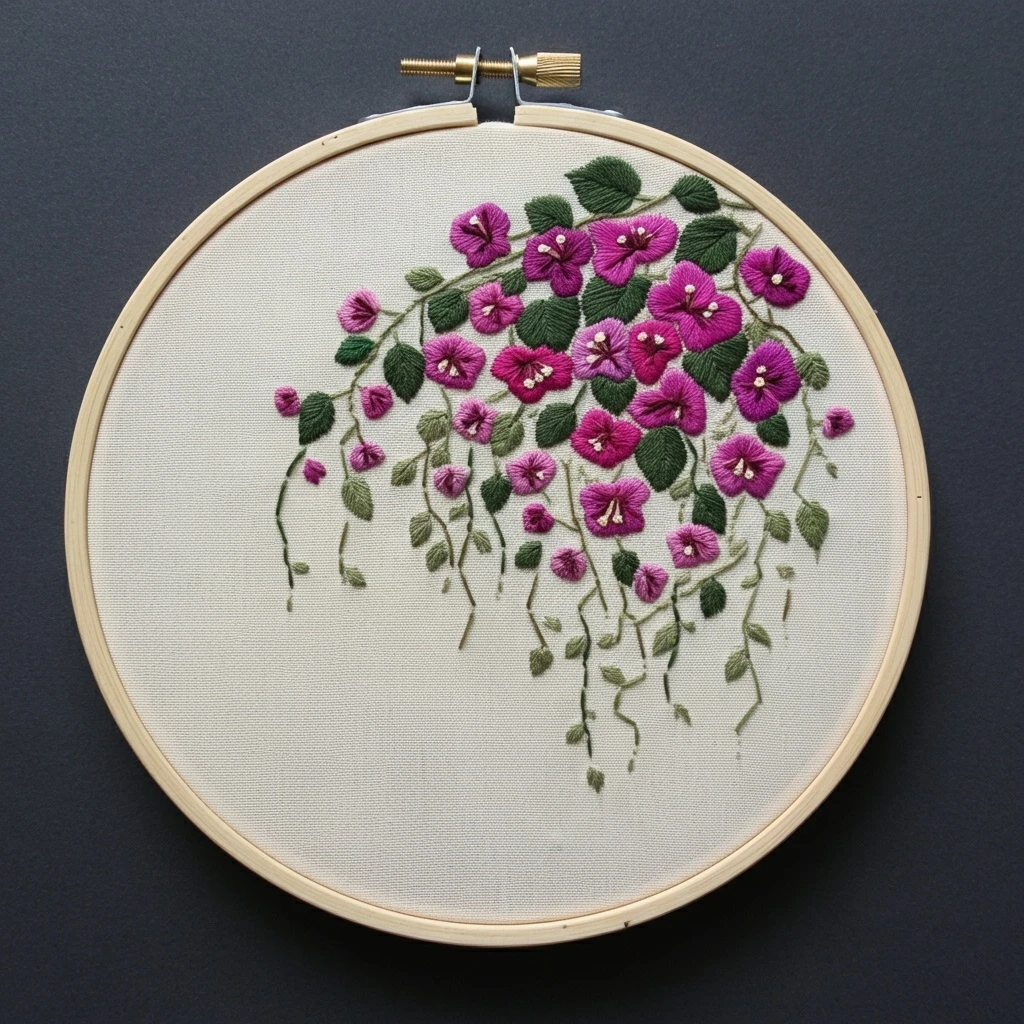
Rainbow Bloom
A joyful sampler-style floral embroidery built from bright rainbow blossoms, simple stems, playful leaves, and repeated decorative stitches. The design should feel fresh and approachable: cheerful color changes, tidy flower centers, soft outlines, and enough stitch variety to make it a useful mini sampler for beginners.
Design color read
The sampler reads as a rainbow garden: warm pink, coral, orange, and yellow flowers mixed with green stems, teal accents, blue details, and violet finishing notes. Because sampler designs often contain many small motifs, the key is restraint—use each color clearly, repeat it in small echoes, and keep outlines tonal instead of heavy black.
Suggested DMC floss palette
These DMC colors give the piece a bright rainbow feel while remaining harmonious on a light fabric. Use the bold shades for focal blooms and the lighter shades for tips, dots, and tiny filler stitches.
Deep pink petals, flower bases, and warm floral definition.
Main pink bloom sections and soft rose petal fills.
Coral blossoms, warm petal transitions, and small decorative flower motifs.
Orange petals, playful accents, and warm sampler highlights.
Golden flower centers, French knots, and warm decorative dots.
Bright center glints, tiny pollen stitches, and light petal tips.
Fresh stems, leaves, and soft green filler stitches.
Darker leaf bases, stem shadows, and botanical contrast.
Teal petals, small blue-green flowers, and cool accent stitches.
Soft aqua highlights, tiny dots, and airy filler details.
Blue bloom accents and cool transition stitches near teal or violet sections.
Violet flowers, purple outline notes, and the final cool rainbow accents.
Stitch map by design element
Round flower centers
Use French knots, colonial knots, or tiny satin circles in gold and pale yellow. Keep centers consistent so the blooms feel related.
Petals
Use detached chain, satin stitch, or long-and-short stitch depending on petal size. Aim stitches outward from the center.
Small sampler flowers
Use lazy daisy, woven wheel, blanket stitch, or tiny straight-stitch petals to give each small bloom its own texture.
Stems
Use stem stitch or backstitch with 1–2 strands. Keep curves smooth and avoid overly thick green lines.
Leaves
Use fishbone stitch for larger leaves, detached chain for small leaves, and single straight stitches for tiny sprigs.
Decorative filler
Use seed stitch, French knots, and tiny straight stitches in leftover rainbow colors to fill gaps lightly.
Thread-count and blending guidance
| Area | Strands | Blending idea | Practical note |
|---|---|---|---|
| Main blossoms | 2 strands for petals; 1 strand for tiny details | Pair each strong hue with a lighter neighbor: rose with coral, orange with yellow, teal with aqua, blue with violet. | Use the same petal stitch on flowers of similar size to keep the sampler tidy. |
| Centers and pollen dots | 2 strands for knots, 1 strand for small glints | Use 3820 for most centers, then add 744 or 3865-style tiny glints if desired. | Knot size should match flower size; tiny blooms only need one or two knots. |
| Stems and leaves | 1 strand for delicate stems, 2 strands for main stems | Use 3012 at the base and 3013 on tips or light-facing edges. | Do not overuse green; let it connect the flowers without dominating the rainbow palette. |
| Rainbow filler | 1 strand | Repeat small dots or seed stitches in colors already used nearby to avoid random-looking scatter. | Leave some open fabric between motifs so the sampler stays fresh and readable. |
Recommended stitching order
- Transfer all flower heads, stems, leaves, and small filler dots with a fine removable mark.
- Stitch stems and leaves first so blossoms can sit cleanly on top.
- Work the largest flowers next, placing warm and cool color families evenly across the sampler.
- Add small flowers, decorative petals, and color-matched filler stitches.
- Finish with French-knot centers, tiny highlights, and any final tonal outlines.
Beginner-friendly practical tips
- Use short thread lengths to keep bright floss smooth and untangled.
- Start with the greens if you are unsure; stems help organize the flower placement.
- Keep outlines tonal—pink around pink petals, teal around teal petals, violet around violet petals.
- Practice French knots on scrap fabric before adding flower centers.
- Step back after every few motifs to check that colors are evenly distributed.
Texture, shading, and finishing notes
A rainbow sampler should feel lively but not cluttered. Use repeated stitch types to create unity, then let the color changes supply the playful energy.
Color balance
Distribute warm and cool colors across the design rather than grouping all warm tones on one side. Small echoes of teal, yellow, or violet near other colors help the sampler feel intentionally balanced.
Practical finishing
Keep knots and raised stitches for the final pass so they stay crisp. When complete, press from the back on a folded towel, then mount with light tension so the many small stitches do not distort.