
DMC palette & embroidery notes
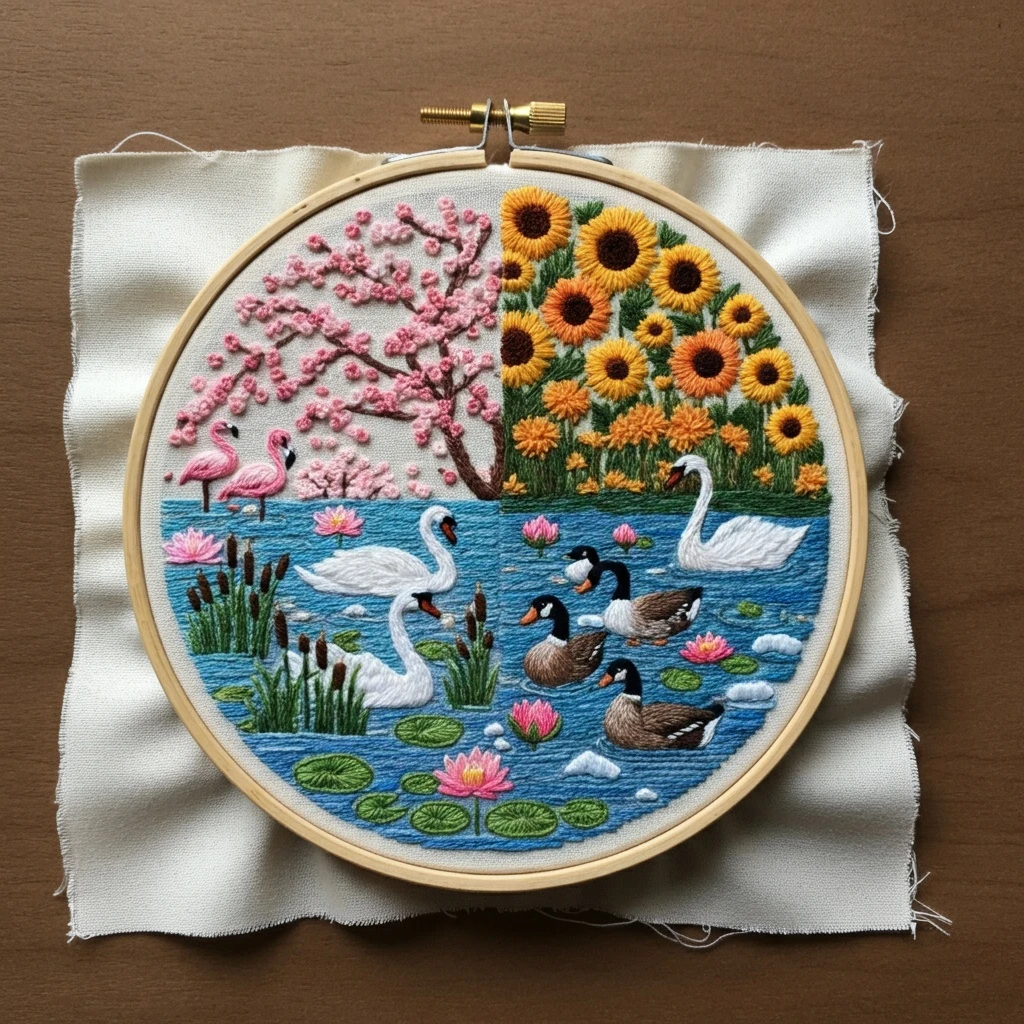
Seasonal Lake Scene
A calm landscape guide for stitching soft sky, reflective water, wooded banks, seasonal foliage, and small rustic details with a painterly but approachable hand-embroidered finish.
Design read
This pattern calls for cool lake blues, misty sky tones, layered tree greens, warm shoreline grasses, and deeper outlining shades. Keep the water horizontal and smooth, then add broken highlights so the lake feels reflective rather than flat.
Recommended DMC Color Palette
Use the palette as a practical stitching map. The main design benefits from a limited landscape range: cool blues for atmosphere, olive and pine greens for depth, straw and rust for seasonal warmth, and a few dark anchors for definition.
Stitch Plan by Design Area
| Area | Best stitches | Thread guidance | Practical notes |
|---|---|---|---|
| Sky & distant atmosphere | Long and short stitch, split stitch, very light satin fills | 1 strand for soft fill; 2 strands for cloud edges | Keep direction gentle and slightly curved. Blend DMC 3756 into 932 so the background stays airy. |
| Lake water | Horizontal straight stitch, seed stitch, couching for long ripples | 1 strand for fine ripples; 2 strands for larger bands | Work in broken horizontal lines. Alternate 3756, 932, 3768, and a few short 924 shadows below trees. |
| Tree line | Fishbone stitch, lazy daisy leaves, detached chain, irregular satin clusters | 2 strands for foliage; 1 strand for distant trees | Layer 3052 first, then add 3011 and 520 at bases or inner corners. Avoid perfect symmetry. |
| Shoreline grasses & reeds | Straight stitch, fly stitch, stem stitch | 1-2 strands depending on scale | Use DMC 3826 and 975 in upward flicks. Vary lengths to keep the bank natural. |
| Rustic details | Stem stitch, back stitch, split back stitch | 2 strands for visible structure; 1 strand for tiny detail | Use 975 and 3371 sparingly for trunks, dock lines, cabin marks, or small foreground outlines. |
| Seasonal accents | French knots, tiny lazy daisies, small satin leaves | 2 strands for knots and accent leaves | Place DMC 920 and 3826 in small clusters, not everywhere, so the autumn warmth feels intentional. |
Blending, Shading & Texture Suggestions
Water reflection blend
Thread one needle with DMC 932 and 3768 together for a quiet blue-green midtone. Use short, uneven horizontal stitches and leave tiny fabric gaps to suggest shimmer.
1 strand + 1 strand blendhorizontal directionFoliage depth
Start distant trees with 3052, add 3011 around the lower edges, then touch only the deepest pockets with 520. This gives the tree line shape without making it heavy.
light to darkclustered textureSeasonal warmth
Use 3826 for golden reed tips and 920 for rust leaves. Keep these warm stitches small so they glow against the cool lake rather than overpowering the scene.
accent colorsmall stitchesFor a more painterly finish, do not fully fill every section. Landscape embroidery often looks more natural when the base fabric becomes part of the light, especially in sky, cloud, and water areas.
Thread Count & Needle Guidance
Recommended strand counts
- 1 strand: sky shading, distant trees, fine water ripples, delicate reflections.
- 2 strands: main foliage, shoreline grasses, small rustic structures, visible outlines.
- 3 strands: only for bold foreground texture or knots that need to stand out.
Needle & fabric feel
- Use a size 7-9 embroidery needle for most cotton floss work.
- Keep fabric drum-tight in the hoop so long water stitches stay straight.
- For linen or natural cotton, test dark greens first to make sure thread coverage is enough.
Beginner-Friendly Practical Tips
Work back to front
Begin with sky and far water, then tree line, shoreline, and final foreground accents. This order keeps small details crisp.
Use short lengths
Cut floss around 14-16 inches. Landscape colors change often, and shorter lengths reduce fraying in dense foliage areas.
Outline last
Save 3371 and the darkest greens for the final pass. A little definition around tree bases or rustic details is enough.
Keep water calm
Water stitches should be mostly horizontal. Even a scenic lake can look busy if ripple stitches go in too many directions.
Vary foliage shapes
Mix lazy daisy leaves, straight stitches, and small knots. The variety creates a natural tree edge without complex shading.
Step back often
Check the hoop from arm's length before adding more dark thread. Landscapes need contrast, but too much outline can flatten the view.
Finishing Notes
Press the finished piece face down on a clean towel, avoiding heavy pressure over knots or raised grasses. Mount with the waterline level inside the hoop so the scene feels peaceful and balanced. A natural wood hoop pairs especially well with the muted lake blues, pine greens, and warm shoreline accents.
Palette substitutions: if you want a cooler winter lake, replace DMC 3826 and 920 accents with more 822 and 3756. For a stronger autumn version, increase DMC 920 and add a few DMC 921 stitches in the foreground leaves.