
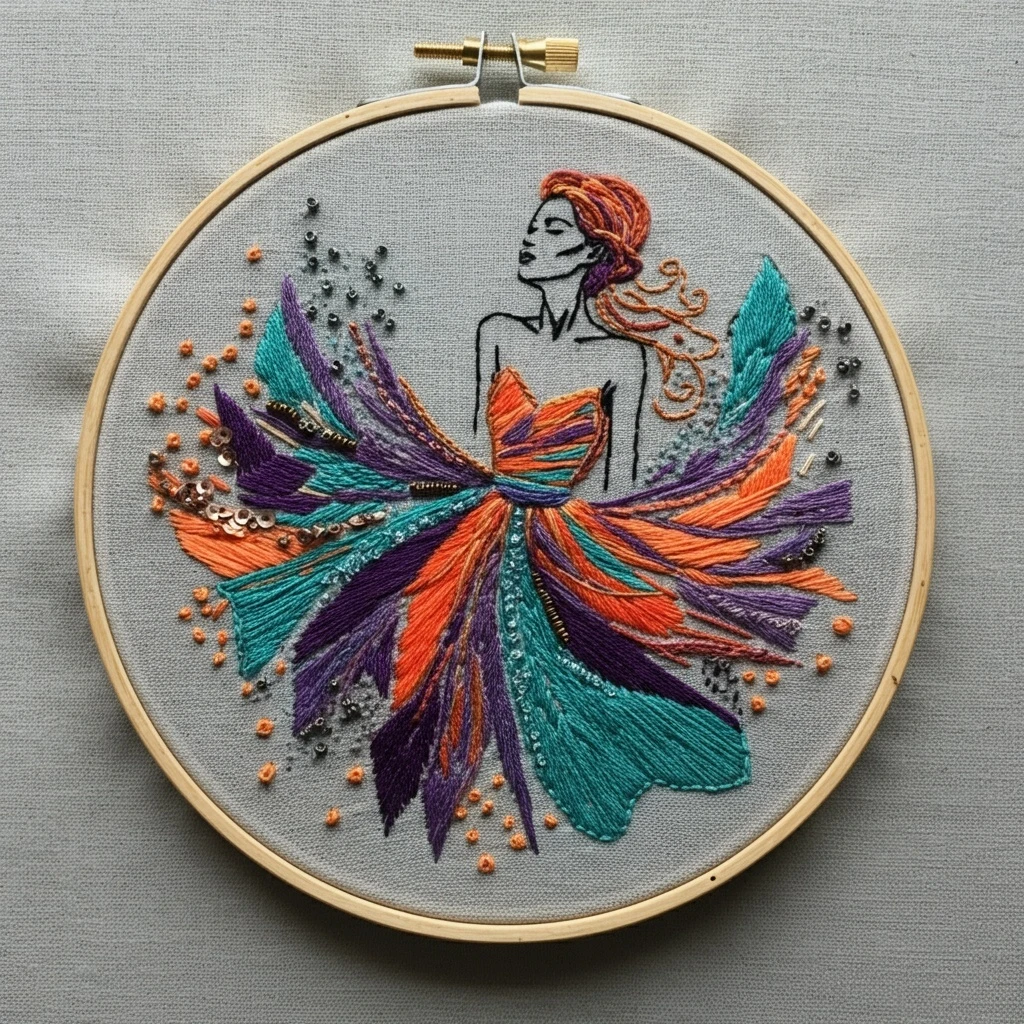
Vibrant Flowing Dress Portrait
A dramatic fashion-portrait embroidery with a fine black figure outline, copper hair, jewel-toned fan-shaped dress panels, teal movement, purple shadows, orange sparks, and bead-like accents scattered around the skirt.
Design Color Reading
The visible sample is stitched on cool grey linen in a round hoop. The composition is anchored by a minimalist portrait: the face, neck, shoulder, and bodice lines are mostly black outline with little or no fill. The dress is the star, spreading outward in long feathered panels of teal, turquoise, burnt orange, coral, deep violet, and plum. Copper-orange hair and airy scroll lines echo the warm dress panels, while black, silver, and orange knots or beads add sparkle around the motion of the skirt.
Likely DMC Color Palette
Palette is visually estimated from the embroidery preview and matched to close DMC six-strand cotton floss shades. Coverage percentages are practical stitching estimates, not exact thread usage.
Stitching Suggestions
Thread Count, Blending & Texture
Recommended strand counts
- 1 strand: face outline, eyelashes, narrow hair curls, scroll lines, fine dress separators.
- 2 strands: most dress filling, hair body, bodice panels, medium accent lines.
- 3 strands: only for the boldest hem sections or raised dots if you want extra texture.
- 6 strands: avoid for this design except optional chunky knots; it may overwhelm the elegant portrait lines.
Blending ideas
- Blend 3808 + 3846 for teal folds that shift from shadow to light.
- Blend 550 + 333 for purple panels with rich depth.
- Blend 666 + 741 for warm coral-orange dress transitions.
- Blend 920 + 947 for copper hair highlights that feel lively but controlled.
Outlining details
Outline the portrait before filling the dress, but save the final black touch-ups until the end. After heavy skirt stitching, re-trace only the areas that need sharpening: chin, lips, neckline, and waist. For a softer fashion-illustration effect, use 844 instead of 310 on a few background dots.
Fabric movement
The dress should look like it is sweeping outward. Keep every panel’s stitches aimed away from the waist. When colors meet, let a few long-and-short stitches overlap instead of creating a hard border, except on the sharp purple fold edges where crisp contrast is part of the design.
Beginner-Friendly Stitch Order
- Transfer lightly: Use a fine washable pen or heat-erasable pen, especially around the face and hair where precision matters.
- Start with the portrait outline: Stitch face and shoulders in 1 strand of black so you have a clean reference point.
- Fill the bodice: Work the small central colored shapes first to establish the waist and dress direction.
- Complete large skirt panels: Stitch from the center outward, alternating areas so nearby dense sections do not distort the fabric.
- Add hair and scrolls: Use copper stem stitches and keep curls relaxed; do not pull tightly.
- Finish with sparkle: Add French knots, seed stitches, beads, sequins, or metallic accents after all flat stitching is complete.
Helpful Notes for a Polished Finish
- Use short stitches around the face; long stitches can flatten the profile.
- Keep the dress panels smooth by laying threads with a needle or laying tool.
- Do not knot thread behind the face if the fabric is light or loosely woven.
- For extra shine, substitute a few 680 old-gold stitches with metallic gold thread.
- Use beads sparingly so the portrait still feels airy and elegant.
- Trim jump threads carefully around open grey fabric spaces.
- When shading skin on grey linen, use very light grey rather than peach unless you want a warmer portrait.
- Save the final black outline pass for last; it instantly restores crispness after filling.