
Winter Woodland Fawn
Design #218 · Winter Animals & Floral Hoop Art
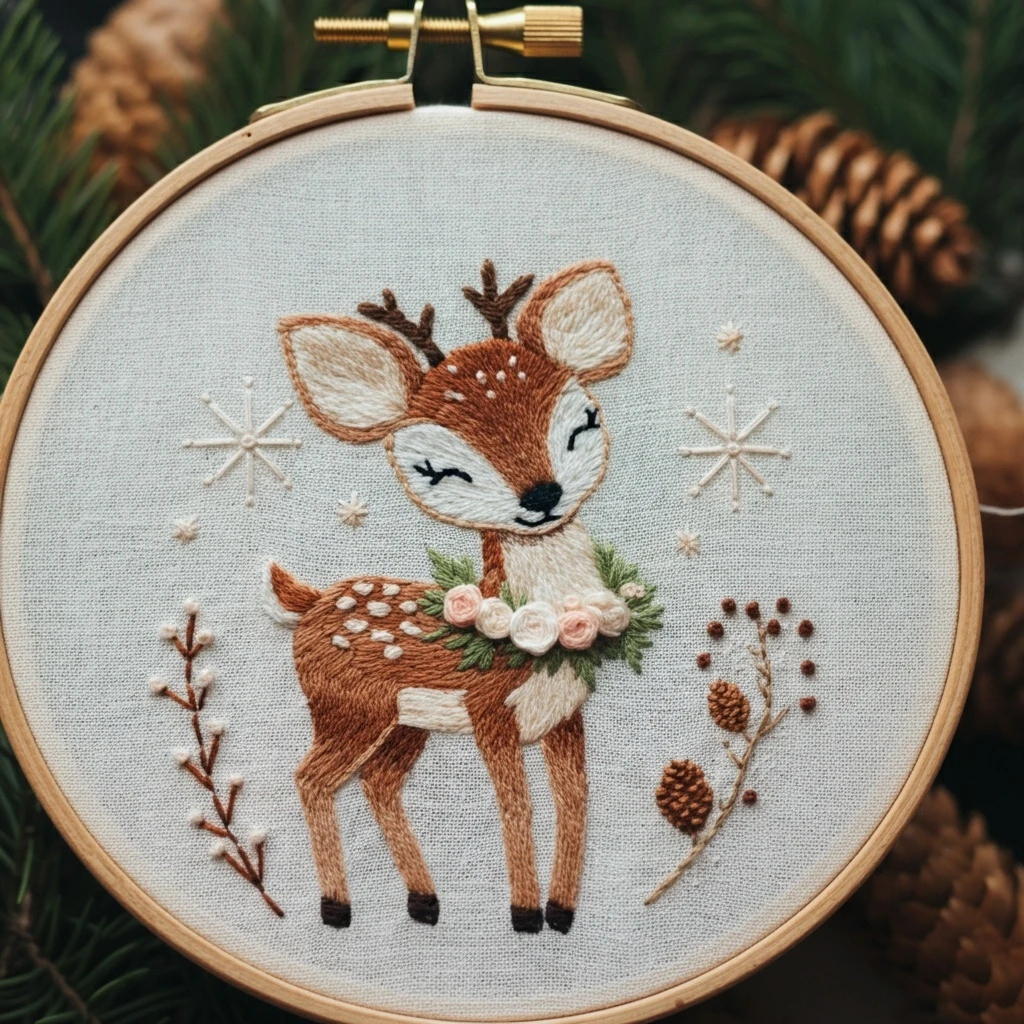
Colors are estimated from the visible embroidery hoop preview and matched to close DMC embroidery floss shades. The design shows a gentle brown fawn with soft cream markings, small antlers, winter greenery, pale flowers, snowflake accents, berry-like dots, and tiny pinecone sprigs.
Preview
Likely DMC Color Palette
Palette based on the fawn body, cream facial and chest markings, pale ear centers, dark hooves and facial details, winter greenery, blush flowers, snowflake accents, twig branches, berries, and pinecones visible in the preview.
| DMC | Approx. Hex | Official-Style Thread Name | Est. Coverage | Where It Appears |
|---|---|---|---|---|
| 920 | #8f4b2d | Copper Medium | 24% | Main fawn coat, head, back, tail, legs, and warm brown body shading. |
| 921 | #b46b45 | Copper | 13% | Lighter brown highlights on the fawn’s legs, body edges, and warm transitions in the coat. |
| 3865 | #f4f1e6 | Winter White | 15% | White face patches, chest and belly areas, small spots, flower centers, and bright snowflake stitches. |
| 738 | #dfc49b | Tan Very Light | 8% | Soft inner ears, pale muzzle shading, and warm cream shadows in the fawn’s markings. |
| 898 | #5a331f | Coffee Brown Very Dark | 8% | Antlers, twig branches, tail detail, darker coat accents, berry stems, and pinecone shadows. |
| 310 | #111111 | Black | 4% | Closed eyes, nose, mouth line, and dark hooves. |
| 3363 | #5d7446 | Pine Green Medium | 8% | Deep evergreen leaves around the neck garland and darker foliage clusters. |
| 3051 | #8b9b5f | Green Gray Dark | 5% | Lighter leaf tips and soft green transitions in the winter wreath around the fawn. |
| 3770 | #f0b8a4 | Tawny Very Light | 5% | Blush pink flowers around the neck garland and small pale floral accents. |
| 761 | #f7d2c8 | Salmon Light | 4% | Lightest flower highlights and soft petal centers in the garland. |
| 433 | #7a4a2a | Brown Medium | 4% | Pinecones, rounded berry-like dots, and warm brown accent knots on side sprigs. |
| 841 | #b69b7b | Beige Brown Light | 2% | Fine branch highlights, pale pinecone edges, and subtle light accents on winter sprigs. |
Coverage percentages are visual estimates from the preview image, not exact thread usage or a measured floss requirement.
Stitching Suggestions
| Design Element | Recommended Stitch Type | Practical Stitching Notes |
|---|---|---|
| Fawn coat and body | Long and short stitch | Follow the direction of the body: curved stitches across the head, angled stitches through the back and haunch, and vertical strokes down the legs. Blend copper shades lightly rather than making hard color blocks. |
| White face, chest, belly, and spots | Satin stitch or long and short stitch | Use smooth short stitches for the face patches and belly. Work the white spots last so they sit crisply on top of the brown coat. |
| Inner ears and muzzle shading | Long and short stitch | Keep the ear centers soft and feathery with pale tan and cream tones. Stitch from the outer ear toward the center so the texture follows the ear shape. |
| Eyes, nose, mouth, and hooves | Backstitch, satin stitch, and tiny straight stitches | Use one strand for closed-eye curves and the mouth. Fill the nose and hooves with small satin stitches for a neat, dark finish. |
| Antlers | Stem stitch or split stitch | Use a dark brown and keep the antlers slightly raised with firm, even stitches. Taper the branch tips with one strand if needed. |
| Neck greenery | Fishbone stitch, straight stitch, and lazy daisy stitch | Layer darker green first, then add lighter green tips. Vary stitch length so the garland looks natural and fluffy around the fawn’s neck. |
| Small pale flowers | Woven wheel rose, satin stitch, or lazy daisy stitch | For rounded flowers, use tiny woven wheels in blush and cream. Keep them compact so they do not cover the green garland completely. |
| Snowflakes and small starbursts | Straight stitch with French knot centers | Stitch each arm from the center outward. Keep tension even so the snowflakes stay crisp and balanced on the linen background. |
| Side twigs and winter branches | Stem stitch with French knots | Work the main branch first, then add small side twigs. Add cream or brown knots at the tips for buds, snow puffs, or berries. |
| Pinecones and brown berry dots | French knots, colonial knots, or small detached chain stitches | Cluster knots closely for pinecone texture. Use slightly uneven spacing for the berry dots so the sprig keeps a handmade woodland feel. |
Where to Start
- Start with the fawn’s main brown body, head, and legs because this anchors the whole composition.
- Add the cream face patches, chest, belly, ear centers, and white body spots after the brown coat is in place.
- Stitch the eyes, nose, mouth, hooves, and antlers next so the fawn’s expression becomes clear.
- Work the greenery and flowers around the neck, layering foliage first and flowers on top.
- Finish with snowflakes, side branches, pinecones, berries, and tiny knots as the final decorative details.
Helpful Notes
- Use 2 strands for most filled areas of the fawn, flowers, greenery, and pinecones.
- Use 1 strand for delicate facial curves, antler tips, fine branch lines, and small snowflake arms.
- Keep stitch direction consistent on the fawn so the coat looks soft and dimensional.
- Save the white spots until the brown coat is finished; they will look cleaner and brighter when stitched on top.
- For the floral garland, place the largest pale flowers first, then tuck greenery stitches around them.
- Because the fabric in the preview is a light neutral linen, cream and winter-white stitches may need tidy edges to stand out clearly.
- The DMC palette and coverage numbers above are close visual matches from the preview only, not exact pattern specifications.
Encouraging Finish
This winter fawn design will shine when the textures are layered gently: soft directional fur, smooth cream markings, raised floral knots, and crisp snowflake accents. Work slowly from the fawn outward, and the finished hoop will feel sweet, cozy, and full of quiet woodland charm.