
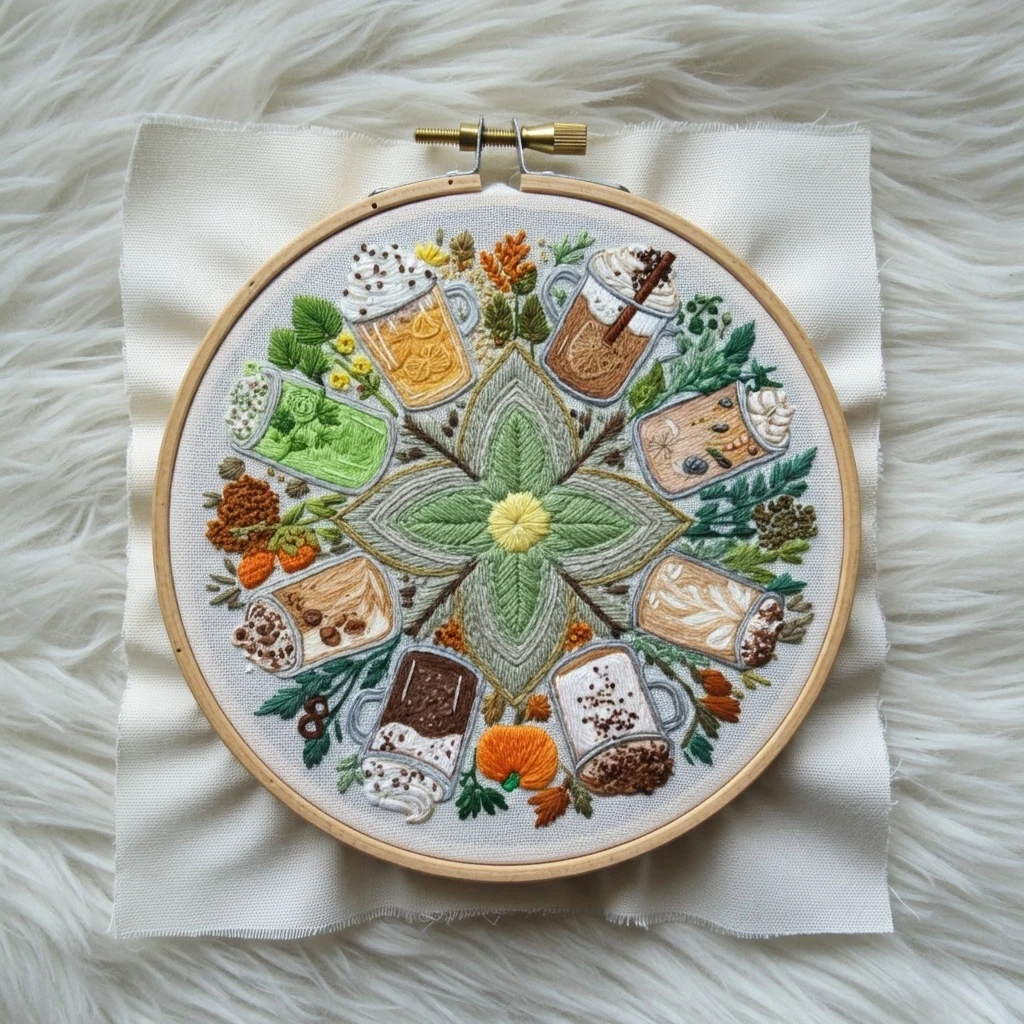
Cozy Autumn Beverage Mandala
This cozy autumn beverage mandala blends a warm cup motif with symmetrical seasonal details: steam curls, spice shapes, leaves, berries, tiny florals, and circular decorative bands. The stitched version should feel inviting and balanced, with latte browns, pumpkin orange, cinnamon red, golden spice accents, cream steam highlights, and muted greenery arranged in repeated motifs around the center.
Polished DMC Color Palette
This palette is warm and autumnal: coffee browns for the cup and beverage, pumpkin and rust for seasonal leaves, cream for steam and foam, muted greens for foliage, and gold for cozy spice details. Repeat the same color placements around the mandala to keep it balanced.
Stitch Map by Design Element
Thread Count & Blending Guide
Precision details
Use 1 strand for steam curls, leaf veins, cup rim outlines, mandala dot rings, spice ends, and final highlight corrections. One strand keeps the symmetry neat.
Main fills
Use 2 strands for cup fills, beverage shading, leaves, larger mandala motifs, and small florals. Two strands gives warm color without bulky rings.
Raised cozy texture
Use 2–3 strands for berry knots, spice dots, foam knots, and selected flower centers. Use three strands only on foreground berries or the central beverage sparkle.
Shading, Outlining & Texture Suggestions
Mandala symmetry
- Mark the center point, cup axis, and main ring guides before stitching.
- Stitch matching motifs opposite each other to keep tension and color balanced.
- Repeat the same stitch direction in every matching leaf, petal, or spice shape.
- Use dot rings sparingly; too many raised dots can make the mandala look uneven.
Warm beverage depth
- Keep darkest browns at the drink edge, cup underside, and handle join.
- Add caramel and cream highlights on the upper curve of the drink and cup.
- Stitch foam or latte art with short pale stitches placed last.
- Use tiny white glints only where the cup or foam catches light.
Autumn leaf texture
- Use copper and rust for shaded leaf bases, pumpkin for the body, and gold for tips.
- Angle stitches toward the leaf point to create natural movement.
- Add veins after filling with one strand so the leaf stays crisp.
- Mix orange and sage leaves to keep the mandala from becoming too warm-heavy.
Outlining approach
- Use coffee brown for cup and spice outlines, rust for leaves, and green-gray for botanical lines.
- Avoid heavy black outlines; warm tonal outlines keep the design cozy.
- Use split stitch for cup curves and stem stitch for steam or mandala arcs.
- Add final outlines before the last cream, gold, and white highlights.
Beginner-Friendly Stitching Order
- Mark the geometry: lightly draw the center, cup shape, steam curls, main mandala rings, leaves, berries, and spice motifs. Accuracy here keeps the mandala polished.
- Stitch the central cup: complete the drink, cup body, rim, and handle shading first so the surrounding motifs can frame it cleanly.
- Add steam curls: stitch airy pale curves above the beverage with one strand and gentle tension.
- Work the leaf ring: stitch autumn leaves and sage leaves in balanced pairs around the mandala.
- Add spices, berries, and florals: place raised knots, cinnamon bars, small petals, and golden centers evenly around the rings.
- Finish with highlights: add cup glints, foam stitches, leaf veins, golden dots, and final outline corrections last.
Practical Tips for a Clean Finish
Fabric & hoop
Warm cream, natural linen, pale oatmeal, or soft taupe cotton-linen suits this cozy palette beautifully. Keep the hoop drum-tight so repeated mandala motifs and steam curls stay smooth.
Needle choice
Use a sharp embroidery needle size 7–9 for one- and two-strand stitching. For three-strand berry knots or foam knots, use a slightly larger needle for clean pull-through.
Keeping it cozy
Let warm browns and oranges lead the design, then use cream, gold, and sage as soft accents. Too many bright highlights can make the mandala feel less autumnal.
Avoiding distortion
Mandala designs show uneven tension quickly. Stitch repeated motifs in small sections and rotate the hoop often so your hands approach each ring consistently.