
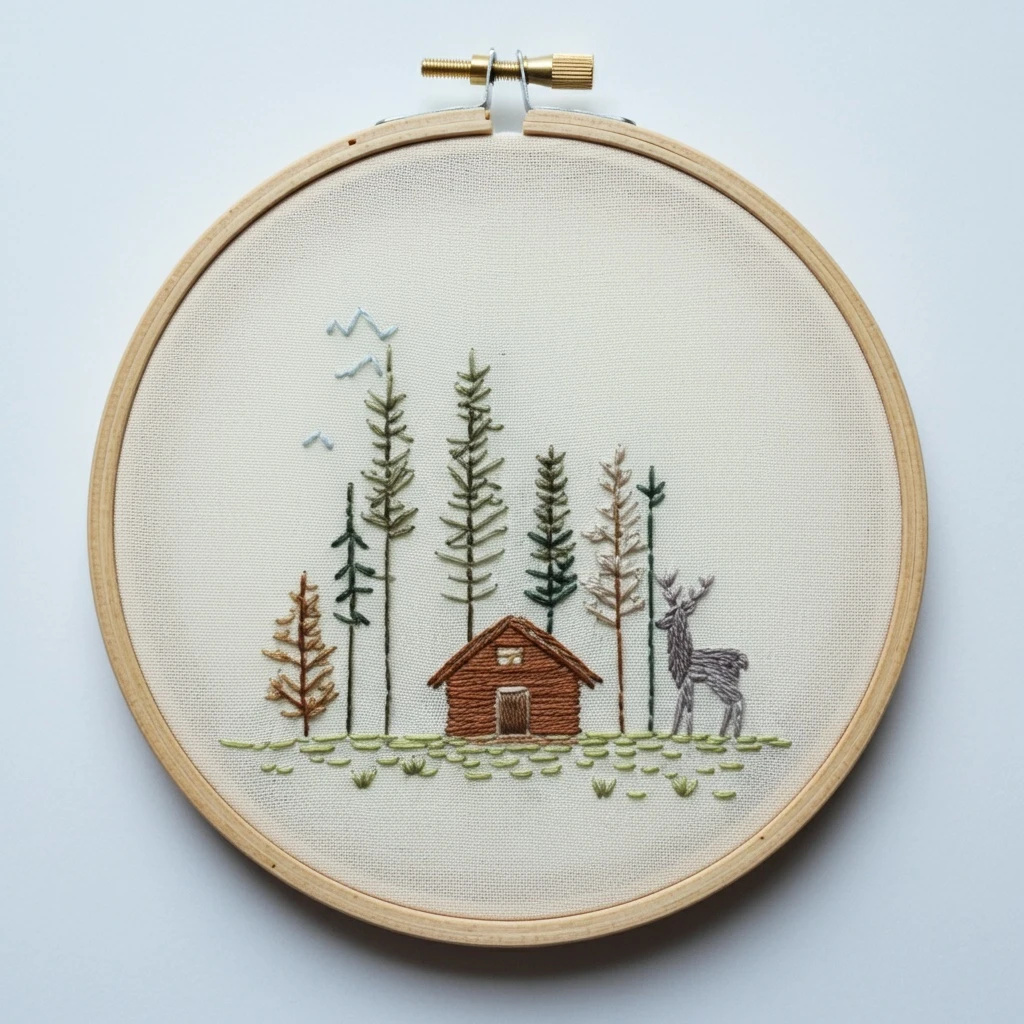
Cozy Cabin Woodland Deer Beginner
This beginner-friendly woodland scene features a small log cabin tucked among tall pine trees, a quiet gray-brown deer, a simple grassy ground line, pale mountain or bird shapes, and a cozy open composition on natural fabric. The embroidery should stay clean and approachable: textured cabin logs, slim pine trunks, simple branch stitches, soft deer shading, muted forest greens, and a few pale sky accents that keep the scene airy.
Polished DMC Color Palette
The reference uses quiet natural colors: reddish cabin browns, dark pine greens, olive and sage ground stitches, gray-brown deer tones, and pale blue sky details. Keep the palette muted so the beginner scene feels calm, rustic, and easy to stitch.
Stitch Map by Design Element
Thread Count & Blending Guide
Beginner fine details
Use 1 strand for deer antlers, small legs, window outlines, door boards, sky marks, tiny grasses, and delicate tree branch tips. This keeps the scene crisp at small scale.
Main simple shapes
Use 2 strands for cabin logs, roof lines, pine branches, ground marks, and the deer body. Two strands gives enough color without making the beginner design bulky.
Optional texture
Use 2–3 strands only for a few foreground grass clumps or cabin log accents. Avoid heavy raised stitches; the reference style is clean, light, and minimal.
Shading, Outlining & Texture Suggestions
Cozy cabin texture
- Stitch the cabin before the foreground grass so the base can overlap naturally.
- Use horizontal stitches for logs and angled stitches for the roof.
- Keep the darkest brown in gaps, eaves, and lower corners.
- Add only a few light wood strokes so the small cabin does not look overworked.
Tall woodland trees
- Work trunks first, then branch stitches from top to bottom.
- Keep pine branches short near the top and longer toward the lower section.
- Alternate dark and medium greens so each tree is visible against the next.
- Let some trees remain airy; the reference has open space around the cabin.
Simple deer shading
- Outline the deer lightly before filling, especially legs and antlers.
- Use darker gray on the neck, back leg, hooves, and underside.
- Add pale gray on the belly, face, and tail for shape.
- Use one strand for antlers so they stay delicate and beginner-friendly.
Outlining approach
- Use tonal outlines: dark brown for cabin, dark green for pines, dark gray for deer.
- Avoid black outlines; the woodland style looks softer with muted natural shades.
- Use back stitch for small doors and windows, split stitch for deer curves, and stem stitch for trunks.
- Add final outlines after the main fills but before tiny grass and sky accents.
Beginner-Friendly Stitching Order
- Transfer the main scene: mark the cabin outline, roof, door, window, tall tree trunks, deer silhouette, ground line, and a few sky marks. Keep tiny grass dots for later.
- Stitch the cabin: work log rows, roof angle, door, and window first so the center of the scene is established.
- Add tree trunks: stitch the vertical trunks behind and beside the cabin, keeping them slim and straight.
- Add pine branches: build branches with short straight or fly stitches, working from top to bottom.
- Stitch the deer: outline and fill the body, then add legs, tail, face, and antlers with one strand.
- Finish with ground and sky: add grass clumps, mossy seed stitches, pale sky marks, and final highlight corrections last.
Practical Tips for a Clean Finish
Fabric & hoop
Natural linen, warm cream, pale oatmeal, or light beige cotton-linen suits this woodland scene and keeps muted greens and browns visible. Keep the hoop drum-tight so long tree trunks stay straight.
Needle choice
Use a sharp embroidery needle size 7–9 for one- and two-strand stitching. A size 9 needle is helpful for deer antlers, tiny window details, and fine grass marks.
Keeping it beginner-friendly
Do not try to fully fill the background. The charm of this design comes from simple lines, open fabric, tiny texture marks, and a clean cabin-and-deer silhouette.
Avoiding clutter
Keep the ground stitches short and scattered. Too many grass marks can hide the cabin base and make the small scene feel crowded.