
Embroidered Calico Cat With Butterflies
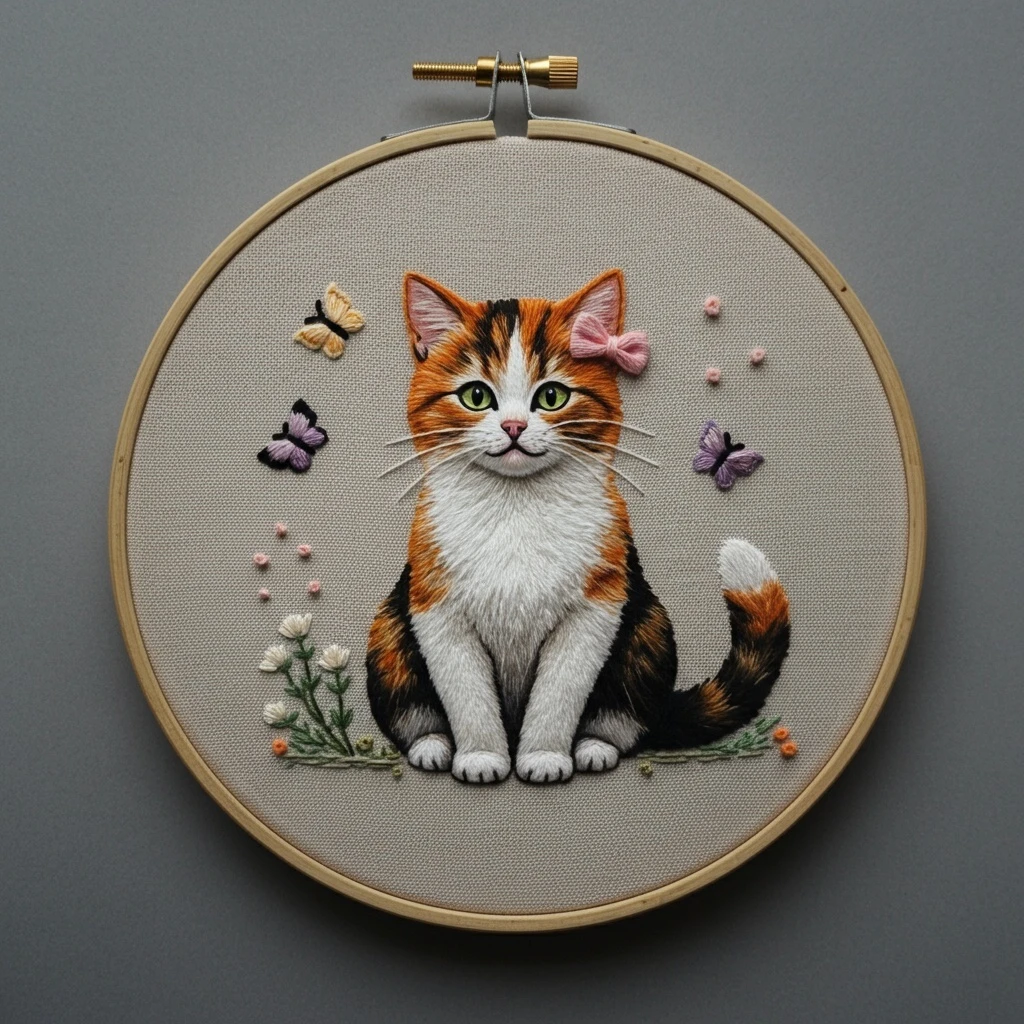
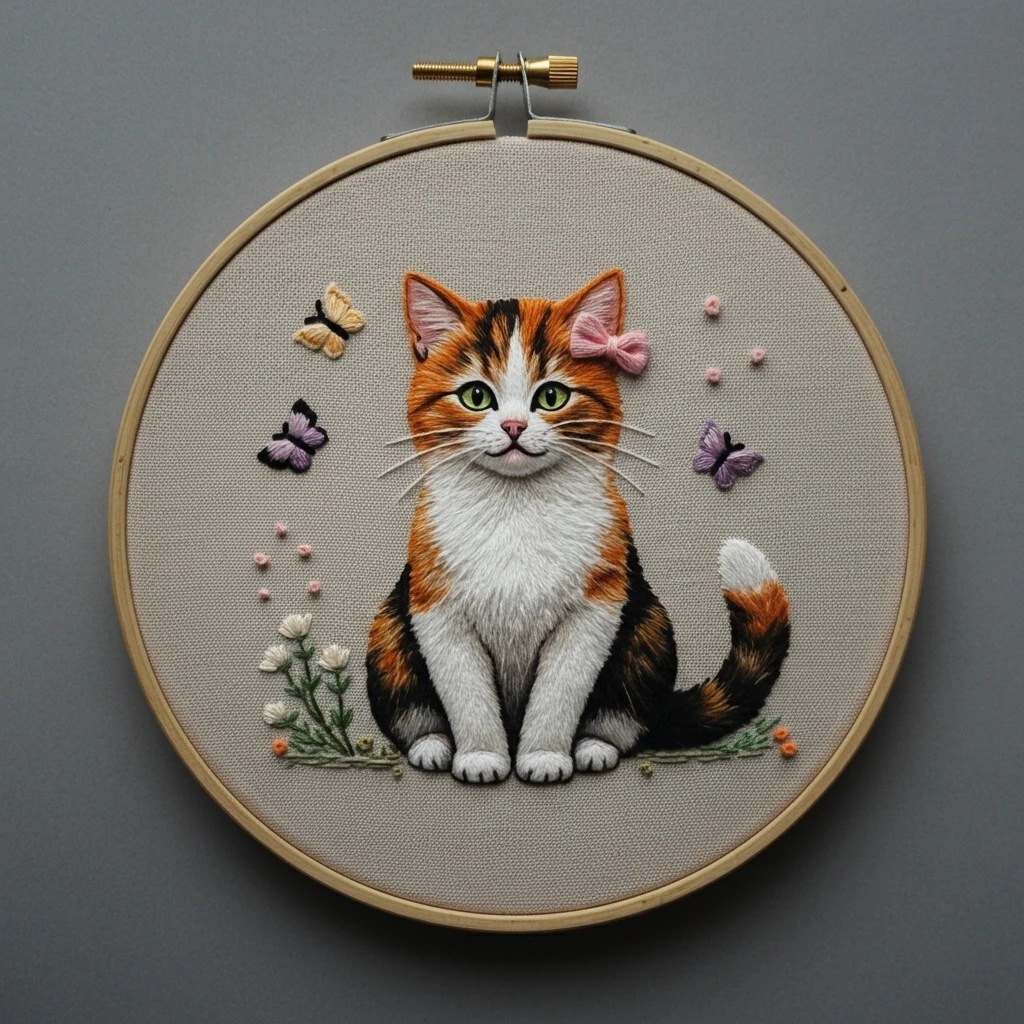
A soft calico kitten portrait with ginger, black, and white fur, green eyes, a pink bow, tiny flowers, and pastel butterflies. These floss matches and stitch notes are estimated from the visible hoop preview and tuned for practical hand embroidery.
Likely DMC Color Palette
Matched to the calico fur, pink bow, lavender and cream butterflies, green eyes, flowers, grass, and soft gray-white shading.
Stitching Suggestions
Build the cat with directional fur stitches first, then add the bow, butterflies, flowers, whiskers, and final crisp details.
| Element | Stitch Type | Practical Notes |
|---|---|---|
| Cat face & orange patches | Long and short stitch | Work in fur-growth direction from the forehead outward. Blend 975 with 722 for sunlit ginger and add 898 in narrow stripe shadows. |
| Black calico patches | Long and short stitch plus split stitch | Use 310 sparingly for the deepest edges, then soften larger dark areas with 3371 so the coat keeps a furry texture. |
| White chest, muzzle & paws | Long and short stitch | Begin with 3865, then feather 762 and 318 into the under-chin, inner legs, and paw separations. Keep the top layer light and airy. |
| Eyes | Satin stitch with backstitch outline | Fill the irises with small satin stitches in green tones; add black pupils and a tiny white catchlight to make the cat feel alert. |
| Whiskers | Single-strand straight stitch or couching | Use one strand of 3865 or pale gray, pulling lightly so the whiskers stay sleek rather than puckered. |
| Pink bow | Padded satin stitch | Add a few straight-stitch padding lines first, then satin stitch over them in 3688. Shade folds with 3354 and outline the knot with split stitch. |
| Butterfly wings | Satin stitch and detached chain | Use 153 for pale wing fill and 340 near the body. Keep each wing segment separate for a delicate embroidered look. |
| Butterfly bodies | Backstitch or tiny satin stitch | Stitch bodies in 310 and add short antennae with a single strand. This anchors the pastel wings visually. |
| White flowers | Lazy daisy stitch | Use 3865 petals around a tiny olive or yellow knot. Vary petal angles so the flower cluster feels hand-grown. |
| Pink and orange buds | French knots | Use one or two wraps for small raised buds. Scatter them lightly around the cat so they support the scene without competing with the face. |
| Grass and stems | Stem stitch, straight stitch, and fly stitch | Layer 3347 first, then add 3362 shadow stems and a few olive 3011 knots at the base. |
| Fine outlines | Split stitch or backstitch | Outline facial markings, paws, ears, and tail edge with one strand so the design stays refined rather than cartoon-heavy. |
Thread Count, Blending & Texture
Use strand changes to create the difference between fluffy fur, smooth bow satin, delicate butterflies, and tiny raised flowers.
Fur direction
Use 1 strand for the final fur layer and 2 strands for base coverage. Stitch from the bridge of the nose outward, down the cheeks, and along the chest so the texture follows the cat’s anatomy.
Calico blending
For orange patches, alternate 975 and 722, then add very thin 898 strokes between them. For black patches, blend 3371 into 310 at the edges to avoid a solid block.
White-fur shading
Keep 3865 dominant. Use 762 for soft shadow and only a few 318 strokes under the chin, between paws, and inside the legs where depth is needed.
Bow dimension
Padded satin stitch makes the bow look raised. Place 3354 in fold lines and use 3688 across the top for a rounded, soft accessory.
Butterfly delicacy
Work wings with 1 strand at the edges and 2 strands in the center if you want stronger color. Add black bodies last so the wing shapes remain clean.
Beginner control
Outline major shapes lightly with split stitch before filling. This keeps the face symmetrical and prevents satin and long-and-short stitches from drifting outside the drawing.
Recommended Stitching Order
A calm order helps keep the face neat and prevents dimensional stitches from snagging while you fill the larger areas.
Helpful Notes for a Polished Finish
Small adjustments make this design look especially clean on neutral linen.
- Use a hoop that keeps the linen drum-tight; loose fabric makes satin stitches and whiskers wobble.
- Separate and recombine floss strands before stitching to reduce twisting, especially in the white chest and orange fur.
- Keep black stitches short. Long black stitches can dominate the cat and flatten the calico texture.
- For the eyes, add the darkest outline first, then fill the iris, then place one tiny white highlight as the final touch.
- Trim thread tails carefully behind white areas so dark carried threads do not shadow through the fabric.
- Press the finished piece face-down on a towel to protect French knots, padded bow stitching, and raised butterfly texture.