
Embroidered Girl in a Lavender Hat
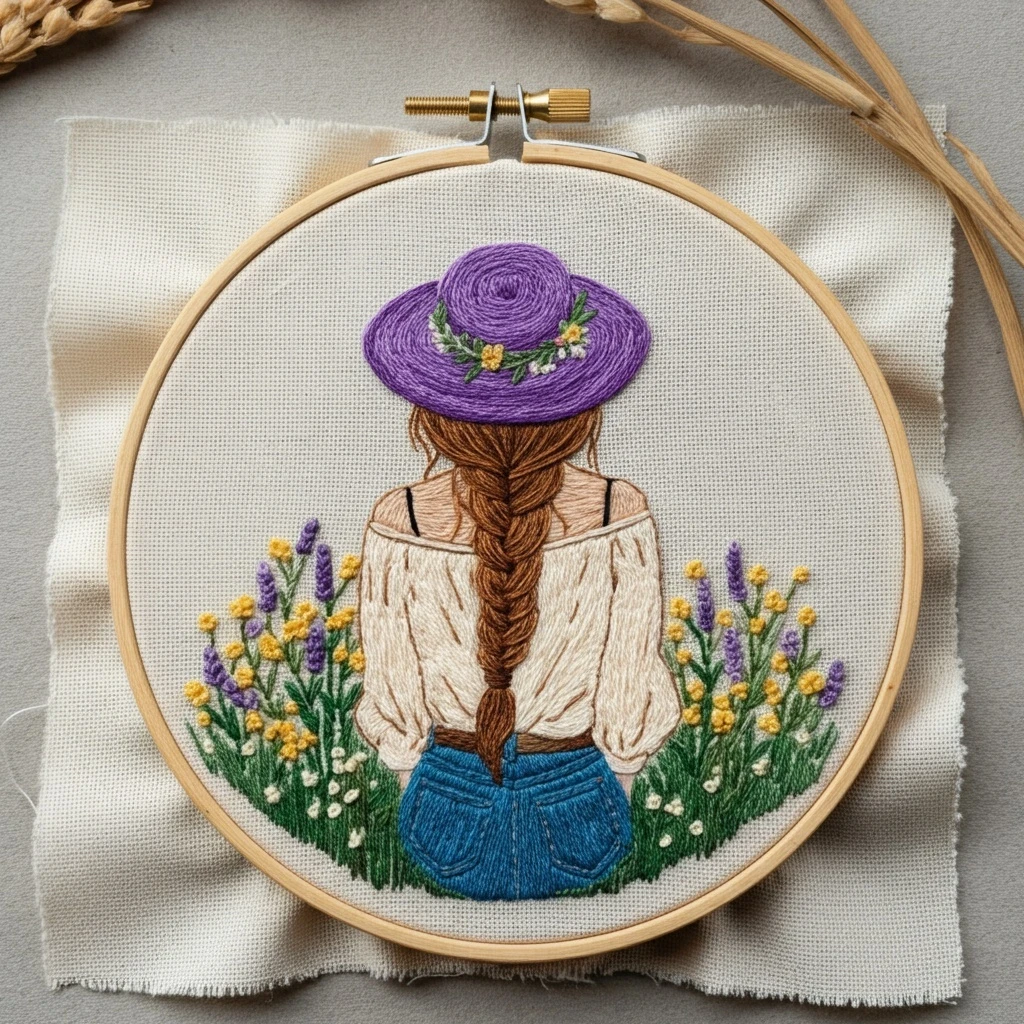
A soft, storybook-style hoop with a seated figure seen from behind, wearing a vivid lavender hat, an airy cream blouse, rich chestnut braid, denim-blue skirt or jeans, and surrounded by meadow flowers in lavender, yellow, white, and fresh greens. The palette below is visually matched to the preview image and translated into practical DMC suggestions for a clean, dimensional finish.

Likely DMC Color Palette
These shades closely match the dominant stitched areas in the design: the purple hat, warm brown hair, creamy blouse, blue lower garment, and mixed meadow flowers. Coverage percentages are visual estimates rather than exact thread consumption.
| Swatch | DMC | Thread Name | Coverage | Practical Use Notes |
|---|---|---|---|---|
| 550 | Violet Very Dark | 9% | Use for the deepest hat shadows, the underside of the brim, and the darkest lavender flower accents. | |
| 553 | Violet | 11% | Main body color for the lavender hat and mid-tone flower spikes. This is the shade that gives the design its signature look. | |
| 554 | Violet Light | 4% | Add to the top of the crown and upper brim for highlights and gentle tonal lift. | |
| 3828 | Hazelnut Brown | 10% | Primary braid color. Great for the broad plait sections and loose flyaway strands. | |
| 801 | Coffee Brown Dark | 6% | Use for hair shadows between braid overlaps, darker waist detail, and contour emphasis around the braid. | |
| 3865 | Winter White | 10% | Best for the brightest blouse areas and tiny white blossoms in the meadow. | |
| 822 | Beige Gray Light | 6% | Soft shadow color for blouse folds so the cream fabric reads dimensional without looking dirty. | |
| 754 | Peach Light | 2% | Good match for the visible neck and shoulder skin tones, especially when paired with delicate outline work. | |
| 996 | Electric Blue Medium | 8% | Main denim tone for the blue skirt/jeans area. Provides a lively medium value. | |
| 820 | Royal Blue Very Dark | 5% | Use sparingly in seam lines, lower folds, and pocket shadows to create believable denim depth. | |
| 890 | Pistachio Green Very Dark | 9% | Anchors the darkest grass tufts and the lower sections of stems. | |
| 3347 | Yellow Green Medium | 6% | Blend into the grass and leafy stems for mid-tone freshness and natural variation. | |
| 729 | Old Gold Medium | 5% | Perfect for the small yellow flower heads around the figure and in the hat trim. | |
| 310 | Black | 1% | Use only in tiny amounts for the blouse straps and a few defining outlines where strong contrast is needed. |
Stitching Suggestions by Element
The design mixes simple linework with soft filling and clustered floral details. Keeping stitch direction consistent will make the hoop look more polished.
| Element | Recommended Stitch | How to Use It |
|---|---|---|
| Lavender hat | Long and short stitch or satin stitch | Work the crown in circular rows and the brim in curved directional bands. Use 553 as the base, 550 in shadow areas, and 554 on the upper planes. |
| Hat flower trim | Lazy daisy, straight stitch, French knots | Create miniature blossoms with detached chain petals and knot centers. Keep these accents crisp and slightly raised. |
| Braided hair | Split stitch, stem stitch, and short satin accents | Outline the braid shape first, then fill each plait with slightly angled stitches so the overlap pattern reads clearly. |
| Blouse | Long and short stitch with fine backstitch detail | Use Winter White for the body, then add Beige Gray fold lines with one strand to suggest gathered sleeves and soft drape. |
| Denim lower garment | Long and short stitch, split stitch, backstitch | Stitch vertically or slightly curved to imitate fabric grain. Add darker blue seam lines and pocket shaping last. |
| Grass and leafy stems | Straight stitch, fishbone stitch, stem stitch | Layer short and long green stitches from the base upward. Mix 890 and 3347 so the meadow stays lively instead of flat. |
| Lavender flower spikes | Colonial knots, French knots, or short detached stitches | Build the flower heads upward in clusters, starting darker at the bottom and lighter near the tips. |
| Yellow and white meadow flowers | French knots and seed stitches | Use 1–3 wraps for the yellow blooms and tiny single knots or seed stitches for the white buds. |
| Fine outlines | Backstitch or split stitch | Use one strand for the cleanest finish around shoulders, straps, garment edges, and any contours that need sharpening. |
Thread Count & Working Method
This pattern looks especially nice when the bold shapes stay smooth and the small floral details remain airy.
- 2 strands for most filled areas: hat, hair, blouse, and blue garment.
- 1 strand for outlines, flyaway hairs, stems, blouse fold lines, and delicate facial/figure contours if present in your transfer.
- 2 strands for grass clusters if you want a slightly fuller meadow.
- 2–3 strands for French knots when you want the yellow flowers to pop more visibly.
- Shorter stitch lengths improve control around the braid, sleeves, and the hat brim curve.
Blending, Outlining & Shading Tips
Blending ideas
- Blend 553 + 554 on the top curve of the hat for a smooth lavender highlight.
- Blend 3828 + 801 through the braid so each twist has depth.
- Use 996 + 820 to suggest denim seams, pocket depth, and shadowed folds.
- Mix 890 + 3347 in the meadow to avoid a blocky green base.
Outlining details
- Use 1 strand for garment edges so outlines feel neat rather than harsh.
- Reserve 310 for the thin shoulder straps and only the darkest defining points.
- On the blouse, outline selectively instead of tracing every edge heavily; light contouring keeps the figure soft.
Shading guidance
- Place the darkest purple under the front brim and inside the crown spiral.
- Deepen the braid where plaits tuck underneath one another and where it meets the neck.
- Add darker blue near the lower garment seams and under the blouse hem.
- Keep grass darker at the base and lighter toward the tips for natural lift.
Suggested Stitching Order
- Start with the central figure so you establish the main proportions before the meadow fills the sides.
- Stitch the hat first, because it is the focal color anchor and helps you judge the rest of the palette.
- Work the braid next, adding dark accents as you go rather than outlining the whole braid too heavily at the end.
- Fill the blouse and blue lower garment before the surrounding flowers, so the silhouette stays clean.
- Add stems and grass from the base upward in uneven heights for a natural field effect.
- Finish with lavender spikes and tiny yellow/white flowers, then place the last French knots and tiny detail stitches.
Texture Suggestions & Beginner-Friendly Tips
- Use a taut hoop so the longer hat and blouse stitches stay smooth and do not pucker.
- For the hat, keep stitches following the curve of the shape—direction matters more than perfect density.
- If the braid feels tricky, divide it into small sections and finish one plait overlap at a time.
- Vary the grass lengths slightly; perfect uniformity can make the meadow look stiff.
- Place knot flowers at the very end so they stay crisp and do not get flattened while you stitch nearby areas.
- Test the purple trio on a scrap first if you want a softer or more saturated hat effect.
- Press the finished hoop from the back with a protective cloth rather than ironing directly on the stitches.
Encouraging Finish
This design shines when it feels soft, relaxed, and slightly storybook in texture. Let the lavender hat stay smooth and bold, allow the braid to carry warm dimensional detail, and keep the surrounding meadow light and playful. If you build the design from the figure outward, the finished hoop will feel balanced, charming, and beginner-friendly while still looking polished.