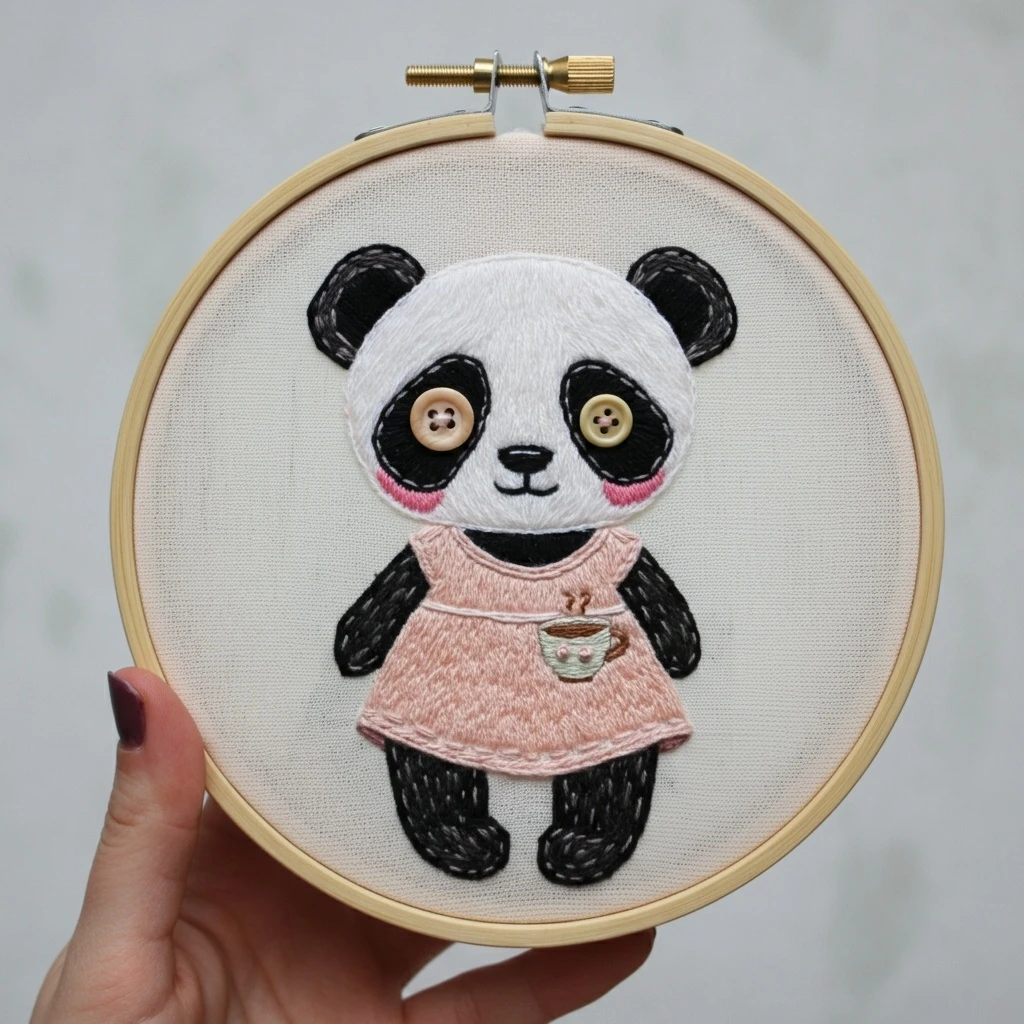

Embroidered Panda In A Pink Dress With Coffee
This design has a charming, cozy personality: a soft black-and-white panda, a rosy pink dress, and warm coffee tones that create a sweet café-inspired mood. To keep the embroidery looking polished, use clean contrast in the panda fur, layered pinks for the dress, and warm beige-to-brown shading on the cup. The overall look works best when the panda stays crisp and graphic while the clothing and cup get slightly softer, blended transitions.

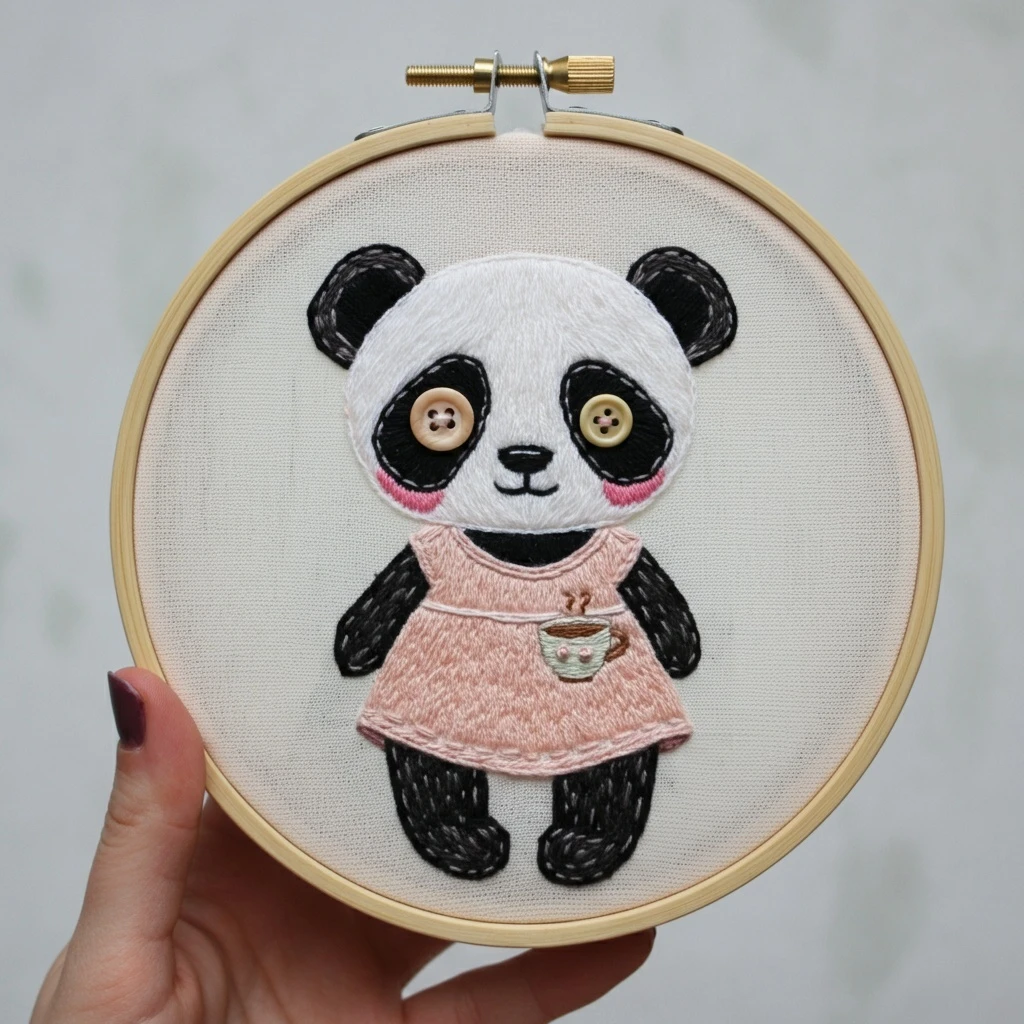
Project snapshot
A quick planning view before you stitch, so your thread choices and stitch direction support the design instead of overpowering it.
Suggested DMC color palette
The palette below is chosen to match the panda’s fur contrast, the pink dress tones, and the warm coffee details, while leaving room for gentle shading and soft highlights.
Recommended stitches by area
- Panda fur: Use long and short stitch for filled areas, keeping the stitch direction curved around the cheeks, belly, and limbs so the body feels rounded and soft.
- Facial features and edges: Use split stitch or fine backstitch in 1 strand for the eyes, smile, nose, and tiny definition lines.
- Pink dress: satin stitch works beautifully for small tidy sections, while long and short stitch is better if the dress has folds or wider skirt areas.
- Coffee cup: Combine satin stitch for smooth cup panels with a touch of straight stitch or seed stitch for foam texture.
- Decorative accents: Tiny blush, sparkles, or trim details can be worked in French knots, single straight stitches, or detached chain stitches.
Thread-count guidance
- 1 strand: facial details, eye highlights, delicate outlines, and any tiny decorative trim.
- 2 strands: most outlining, the dress folds, and smooth fill in medium-size sections.
- 3 strands: the main fur areas when you want a fuller stitched look and stronger visual coverage.
- 4 strands: optional for plush texture on the panda’s belly or ears, especially if you want a slightly padded, cuddly appearance.
- Tip: if the design is small, stay mostly with 1–2 strands to avoid bulky edges and keep the panda’s expression clear.
Blending and color transitions
Even a cute, graphic design benefits from a little blending. Keep the contrast strong, but soften the transitions enough so the embroidery feels finished and dimensional.
- Blend B5200 + 3865 in adjacent rows to make the panda’s white fur glow softly instead of appearing flat.
- Use 310 → 3799 → 317 sparingly where black fur curves into a lighter edge or where a cast shadow touches the white body.
- On the dress, transition from 818 → 761 → 760 so the pink reads layered and gently draped.
- For the cup, mix 738 → 3864 → 437 → 801 from highlight to shadow for a warm coffee-shop look.
- Blend by alternating stitch lengths and slightly overlapping adjacent colors rather than making hard stripe boundaries.
Outlining details
Outline only where it helps define the design. A cute character often looks best when the lines are clean but not too heavy.
- Use DMC 310 for the eyes, nose, and the most important silhouette edges.
- Switch to DMC 801 or 3799 for softer outlines around the cup and pink dress if pure black feels too stark.
- Whipped backstitch is excellent for the outer silhouette because it creates a smooth illustrated line.
- Keep outline thickness consistent, especially around the face, so the expression remains balanced and friendly.
- If the design includes tiny folds or hem lines, one-strand split stitch gives a delicate, refined finish.
Shading and texture suggestions
| Area | Best shading approach | Texture note |
|---|---|---|
| Panda face and belly | Shade lightly with 317 and 3865 near edges and under the chin; keep the central face brighter with B5200. | Use short directional stitches that follow the curve of the cheeks for a soft plush look. |
| Black fur patches | Add 3799 only at transition edges or curves to prevent the black from becoming visually flat. | Vary stitch direction slightly to mimic soft fur without making it shaggy. |
| Pink dress | Place 760 in folds and under overlaps, 761 as the body color, and 818 for top highlights and trim. | Satin stitch gives a sweet polished look; long and short stitch gives more natural drape. |
| Coffee and cup | Use 738 or 3864 on the highlight side, then deepen gradually to 437 and 801 on the shadow side. | A few scattered seed stitches in the foam can suggest bubbles or froth. |
| Cheeks and tiny accents | One or two tiny touches of 818 or 761 are enough; keep blush subtle so it does not overpower the face. | French knots or very short satin stitches make sweet accent details. |
Suggested stitching order
Beginner-friendly practical tips
- Use a hoop with good tension so satin stitches on the dress and cup stay smooth and even.
- Separate floss strands before rejoining them; this reduces tangling and gives cleaner coverage.
- For black areas, keep stitch length slightly shorter than usual so curves look neat and controlled.
- Do not overfill the eyes or nose—tiny features are stronger when stitched simply and cleanly.
- Test the pink combination on scrap fabric first. If the dress needs more contrast, increase the amount of DMC 760 in the folds.
- If white thread looks too stark on your fabric, swap more of the fill to 3865 and reserve B5200 only for highlights.
- When outlining around filled areas, stitch slowly and let the line sit just outside the fill rather than piercing through it repeatedly.