
Ice Skating Penguin

Ice Skating Penguin — DMC Palette & Stitching Guide
DMC palette & practical stitch guide

Ice Skating Penguin

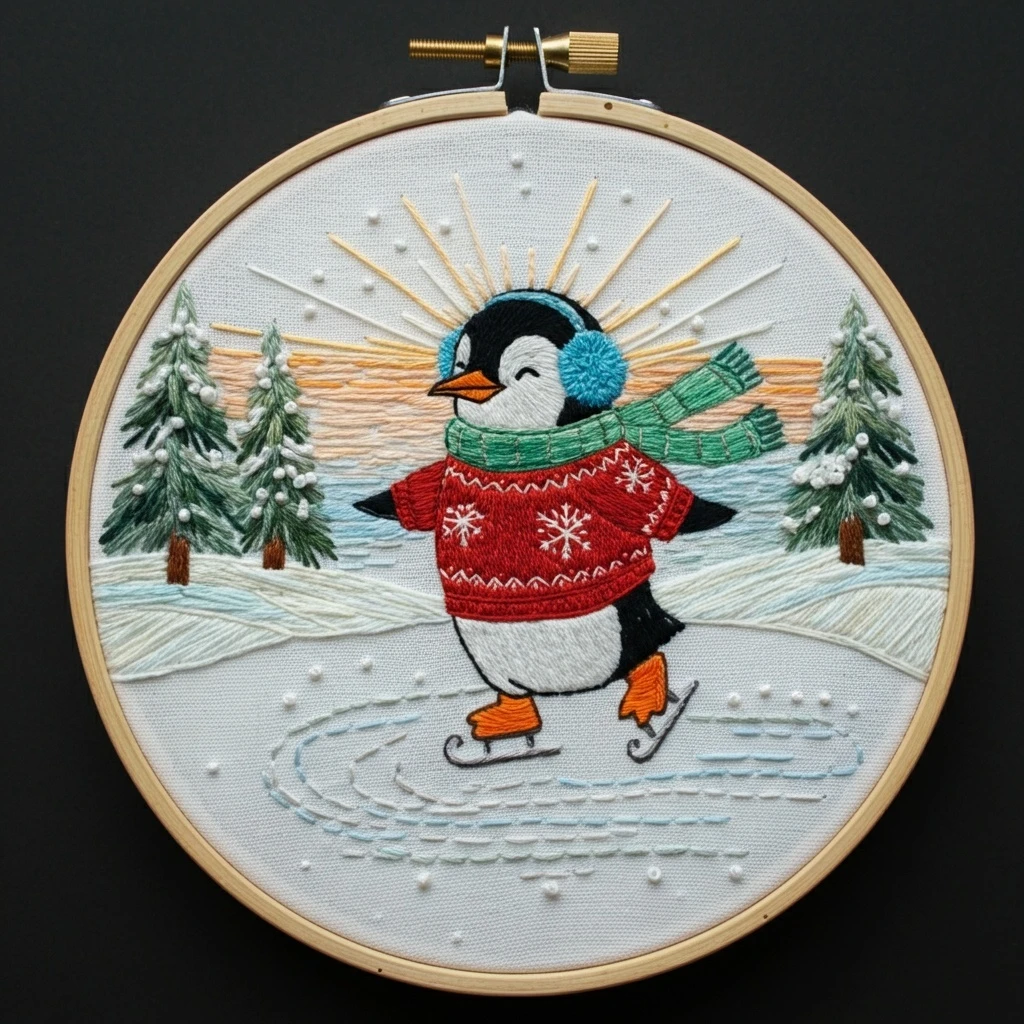
A cheerful winter hoop with a black-and-white penguin, bright red scarf, turquoise earmuffs, icy skate marks, snowy banks, falling pom-pom snow, and cool evergreen trees. The design benefits from crisp outlining, soft satin-filled body shapes, fluffy snow texture, and lively directional stitches for motion on the ice.

Winter character hoopBright scarf accentTextured snowBeginner friendly
Ice Skating Penguin Embroidery Hoop

Observed colors & design notes

The artwork is built around a soft gray linen ground, snowy white landscape, deep black penguin markings, warm orange beak and feet, a saturated red scarf, aqua-blue earmuffs and ice strokes, plus blue-green pine trees. Keep the penguin outline clean and graphic, then let the trees, snowballs, and rink marks add texture.

DMC 310 — BlackUse: penguin back, head cap, wing edges, eye, skate metal outlines, and the strongest facial definition.
DMC B5200 — Snow WhiteUse: belly highlights, face, wing interiors, falling snow, and the brightest ridges on the snowbank.
DMC 3865 — Winter WhiteUse: soft belly fill and shadowed snow so the whites do not look flat against the fabric.
DMC 762 — Pearl GrayUse: subtle ice shadows, skate blades, and pale contouring around snow and white body sections.
DMC 321 — Christmas RedUse: the scarf body and main folds; excellent for the central holiday color pop.
DMC 902 — GarnetUse: scarf fold shadows, fringe tips, and narrow stitched lines that make the scarf dimensional.
DMC 3844 — Bright TurquoiseUse: earmuffs, the strongest ice dashes, and cool accents near the skating path.
DMC 3846 — Light TurquoiseUse: blended earmuff highlights and pale rink reflections around the penguin’s feet.
DMC 3812 — SeagreenUse: mid-tone pine branches and small tree clusters.
DMC 3813 — Blue Green LightUse: frosty branch tips and lighter trees in the background.
DMC 3808 — Turquoise DarkUse: deepest evergreen undersides and a few darker ice cracks for contrast.
DMC 741 — TangerineUse: beak, feet, and warm highlights on the orange areas.
DMC 921 — CopperUse: beak and foot shadows, toe separations, and tiny warm details near the skates.
DMC 801 — Coffee BrownUse: tree trunks and the soft brown band of the earmuff headband.

Stitch plan by area

AreaSuggested stitchesWorking note
Penguin outlineBack stitch or whipped back stitchUse 1–2 strands of 310; whip the final outline for a smooth cartoon edge.
Belly and faceLong-and-short, split stitch fillBlend B5200 with 3865 using short angled stitches to follow the round belly.
ScarfSatin stitch, stem stitch, straight stitch fringeWork lengthwise in 321, then add 902 crease lines and fringe knots.
EarmuffsWoven wheel or padded satinA small spiral/woven fill makes the earmuff look soft and plush.
Pine treesFishbone, fly stitch, detached chainLayer dark-to-light branch strokes from trunk outward for snowy evergreen texture.
Snow and iceFrench knots, couching, running stitchUse knots for falling snow and loose dashed lines for skate marks.

Thread-count guidance

Fine details

Use 1 strand for the eye, mouth, skate curls, inner wing lines, and delicate gray ice marks. This keeps the character crisp rather than heavy.

Main filled shapes

Use 2 strands for the penguin body, scarf, orange feet, and tree branches. Two strands give coverage while still allowing curves and shading.

Texture accents

Use 3 strands only for raised snow knots, scarf fringe, or plush earmuff texture. Reserve bulk for places that should feel dimensional.

Blending, shading & texture suggestions

White-on-white shading

Alternate B5200 and 3865 on the penguin belly. Add a few 762 stitches along the left/lower edge to separate the body from the snow without making it look gray.

Scarf folds

Fill the scarf in 321 using short satin sections that change direction at each fold. Add single 902 stem stitches at fold lines and fringe bases.

Moving ice

Scatter short running stitches in 3844, 3846, and 762 around the skates. Angle them horizontally and slightly curved so the penguin appears to glide.

Evergreen depth

Start with 3808 near trunks and branch undersides, layer 3812 over the middle, then touch branch tips with 3813 for a frosted look.

Fluffy snow

Use B5200 French knots for falling snow. For the snowbank, combine loose split stitch with a few couching lines to create soft drifts.

Warm accents

Keep 741 bright on the beak and feet, then use 921 sparingly for under-toes and the lower beak edge so the orange stays cheerful.

Beginner-friendly working order

Best sequence: background snow and trees first, ice dashes next, penguin body fills, scarf and earmuffs, then final black outline and snow knots. This prevents raised knots and dark outlines from catching while you fill larger areas.

1. Transfer lightly

Use a water-soluble pen on pale gray or natural linen. Keep ice lines and snow dots faint so they do not show beneath white floss.

2. Stabilize the hoop

Because satin fills and knots can pucker, keep fabric drum-tight and re-tighten after finishing the snowy bank.

3. Shorten satin spans

For the scarf and wings, divide long shapes into smaller satin sections. This avoids snagging and gives the folds a stitched direction.

4. Outline last

Add the 310 outline after fills are complete. A final whipped back stitch hides uneven fill edges and makes the penguin look polished.

5. Knot snow with spacing

Vary French knot size by wrapping once or twice. Keep some snow dots small so the scene stays airy and does not overwhelm the character.

6. Press from the back

After washing out transfer marks, dry flat and press face-down on a towel to protect the snow knots and earmuff texture.

Designed as a practical DMC floss and stitch-planning companion for the Ice Skating Penguin hand embroidery pattern.

Leave a Reply

Your email address will not be published. Required fields are marked *