
DMC color palette & embroidery guide
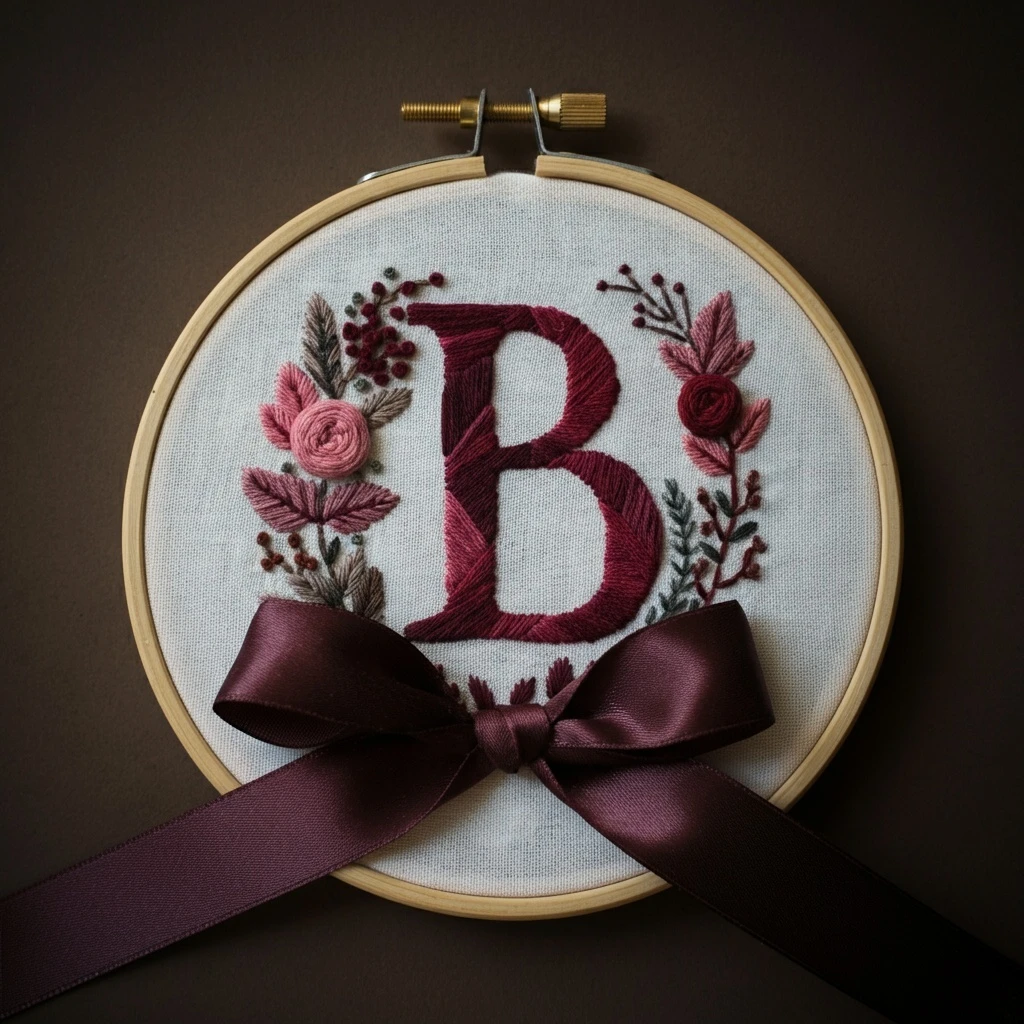
Monogram B Floral
A romantic floral initial with a rich burgundy satin-textured letter, dusty rose blooms, soft mauve leaves, tiny berry clusters, smoky green foliage, and a deep wine bow. The palette below keeps the design elegant and heirloom-like while giving beginners practical choices for smooth filling, crisp edges, and dimensional flowers.
Carefully Matched DMC Palette
The design is led by a dark wine monogram and ribbon, then softened with rosy flowers and grey-green botanical details. Use the deepest tones sparingly for depth; let the middle rose and mauve shades do most of the visible petal work.
Thread Count & Coverage
- Monogram B: 2 strands for most satin or long-and-short filling; switch to 1 strand at inner curves and serifs for cleaner turns.
- Flowers: 2 strands for woven roses and fishbone petals; 1 strand for tiny petal tips and individual vein details.
- Stems and berry sprays: 1 strand keeps the branches airy and prevents the foliage from overpowering the initial.
- Ribbon/bow illusion: 2 strands of 814/815/3371 in broad satin bands, with 1-strand highlights if adding stitched shine.
Blending Ideas
For a velvety monogram, blend one strand DMC 814 + one strand DMC 815 in the lower and left sections, then move to 815 + 816 along the brighter raised ridges. For rosy flowers, blend 3687 + 778 on outer petals and 3685 + 316 where petals tuck into shadow.
Keep blends directional: angle each stitch to follow the curve of the B. This creates the same ribbed, dimensional look seen in the reference without needing complicated shading.
Stitch Suggestions by Design Area
Shading & Texture Plan
| Area | Color Movement | Practical Direction |
|---|---|---|
| Monogram body | 814 → 815 → 816 | Start dark on the left and lower edges, then brighten toward the top and central ridges. Keep stitches slightly diagonal for a carved textile effect. |
| Pink roses | 3685 → 3687 → 778 | Dark centers, mid-tone spiral, pale outer ring. Do not overfill the center; tight weaving creates natural dimensional shadow. |
| Side florals | 316 + 3687 + 3685 | Use fishbone stitch with alternating colors from petal to petal instead of trying to shade every tiny leaf. |
| Foliage | 3011 + 3021 + 645 | Let foliage stay muted and fine. One-strand stitches make the floral clusters look refined rather than heavy. |
| Berries and buds | 3371 + 814 + 816 | Use the darkest color at the bottom of clusters and brighter garnet for berries closer to the flower heads. |
Beginner Tip: Tackle the Letter First
Outline the B with split stitch, then fill one small section at a time. Do not carry long threads behind the open counter of the letter; stop and restart for cleaner fabric.
Beginner Tip: Keep Knots Consistent
For berries, use the same number of wraps across each cluster. Vary color, not knot size, unless the pattern clearly shows larger berries.
Beginner Tip: Press Before Finishing
Press the finished embroidery face-down on a towel. This protects raised roses, knots, and padded monogram stitches.
Finishing Notes
Mount on warm white, ivory, or pale oatmeal linen to echo the reference fabric. A 6-inch or 7-inch hoop suits the balanced monogram composition; keep the flower sprays close to the letter so the design feels intentional and centered. If adding a real ribbon bow, stitch the embroidery first, then attach the bow last with small hidden tacking stitches in DMC 814 or sewing thread that matches the ribbon.
For a polished gift finish, back the hoop with felt and add a small label noting the monogram, date, and DMC palette used.