
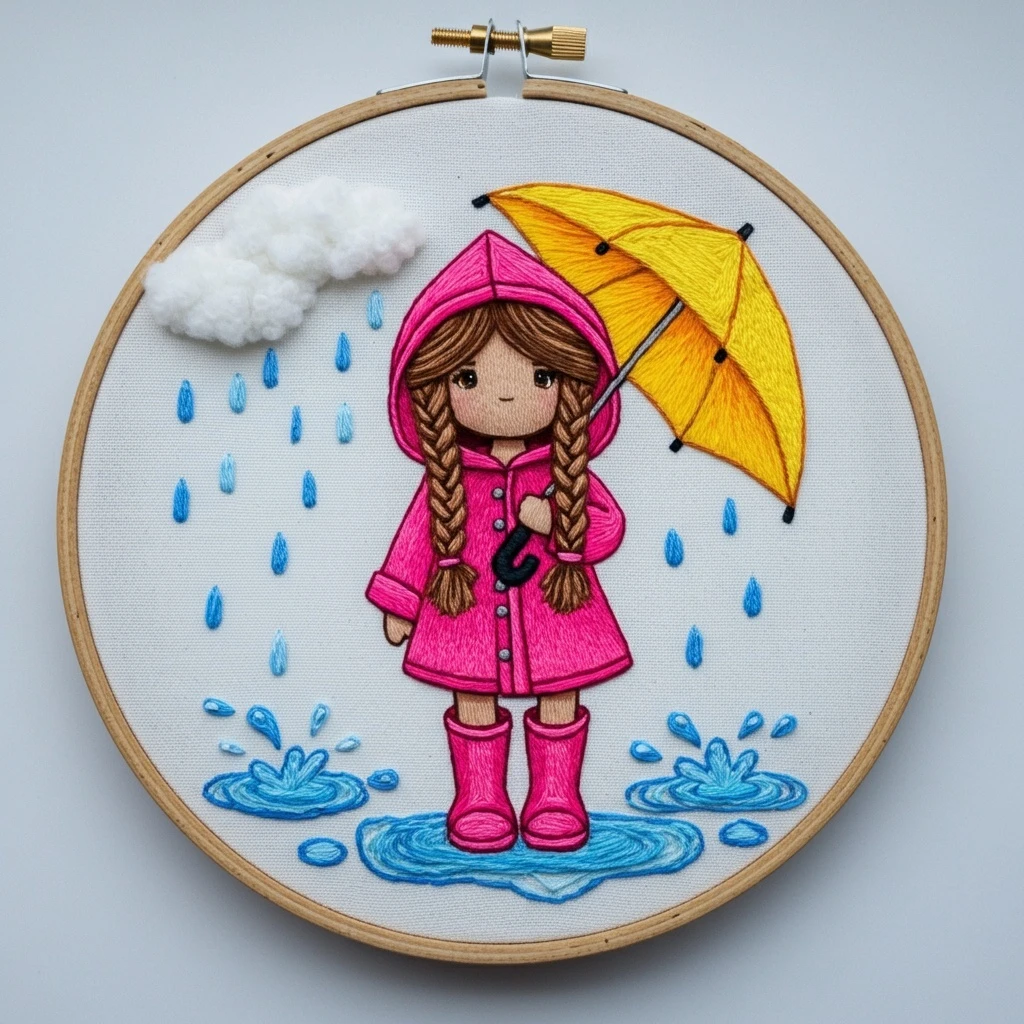
Rainy Day Girl
A gentle storybook-style embroidery scene featuring a girl dressed for a rainy day, with soft stormy blues, cool greys, puddle reflections, and a few cheerful accents that keep the design from feeling flat. The strongest finish comes from smooth clothing shading, delicate facial details, clean umbrella or coat outlines, and airy raindrop texture.
Design color read
This design likely centers on cool weather colors: slate blue, misty aqua, light grey, and soft pewter for the rainy atmosphere. A small warm note such as yellow boots, a raincoat detail, rosy cheeks, or brown hair prevents the palette from becoming overly cold. The background rain should stay understated so the figure remains the focus.
Suggested DMC floss palette
These DMC colors support a polished rainy-day illustration: cool neutrals for weather and outlines, blue families for clothing and puddles, and a few warm accents for the girl herself.
Deep outlines, umbrella ribs, shoe shadows, and the darkest weather details.
Main grey shading for rainy outlines, folds, and cloudier background accents.
Soft rain streaks, misty highlights, and lighter clothing or puddle reflections.
Main stormy blue for coat, umbrella, or dress sections.
Blue highlights, puddle ripples, and softer clothing folds.
Raindrops, pale reflections, and airy atmospheric highlights.
Cool aqua accents for puddles, water sheen, and decorative weather details.
Cheerful yellow boots, coat trim, umbrella accents, or tiny warm highlights.
Base skin tone for face and hands.
Skin shadows, ear detail, and small facial modeling.
Rosy cheeks, lip tint, or a sweet accent bow/detail.
Hair, shoes, umbrella handle, and selective grounding outlines.
Stitch map by design element
Face and hands
Use one-strand long-and-short stitch or tiny satin areas for skin. Keep facial features in fine backstitch or split stitch.
Hair
Use long-and-short stitch or directional satin stitch, following the hair flow from crown to ends for a smooth, natural finish.
Coat or dress
Use satin stitch, split stitch fill, or long-and-short shading in blue-greys. Emphasize fold direction, not just flat color blocks.
Umbrella
Use satin stitch or neatly laid long-and-short stitch in separate umbrella panels, with backstitch for ribs and handle.
Raindrops and puddles
Use straight stitches, seed stitch, or tiny split-stitch rings. Keep rain light and evenly spaced rather than dense.
Accent details
Use French knots or tiny straight stitches for buttons, blush, sparkle highlights, and small decorative touches.
Thread-count and blending guidance
| Area | Strands | Blending idea | Practical note |
|---|---|---|---|
| Figure details | 1 strand for face, hands, and fine outlines | Use 948 as the skin base, 754 in the shadows, and a touch of 761 for cheeks. | Keep the face simple. Too many heavy lines can make a sweet illustration look stiff. |
| Blue clothing or umbrella | 2 strands for fill, 1 strand for fold lines and highlights | Use 931 in shadowed folds, 932 in the main areas, and 3750 along the light-facing edges. | Work one panel or section at a time so the shading stays consistent across the garment. |
| Rain and puddles | 1 strand | Combine 414, 3750, and 3811 for layered water effects without harsh contrast. | Rain should frame the figure, not cover her. Leave open fabric between drops. |
| Warm accents | 1-2 strands depending on motif size | Use 3820 for bright cheerful details and 838 for hair or grounding accessories. | A small amount of yellow goes a long way and helps the rainy palette feel lively. |
Recommended stitching order
- Transfer the full figure carefully, including face placement, hair shape, clothing seams, umbrella arcs, and puddle lines.
- Stitch background rain or puddle details first if they sit behind the figure.
- Work the skin and hair next so the face stays clean and easy to judge.
- Fill the coat, umbrella, boots, and other clothing sections, adding tonal outlines as needed.
- Finish with rain streaks, tiny highlights, cheeks, buttons, and final accent stitches.
Beginner-friendly practical tips
- Use the shortest thread lengths on the face and hands to reduce fuzz and keep details crisp.
- Mark the eye and mouth placement lightly before stitching; expression matters more than tiny realism.
- For smooth umbrella panels, always stitch in the direction of the panel shape rather than straight across.
- Practice a few rain lines on scrap fabric first so they stay delicate and evenly spaced.
- Press from the back on a towel to protect any French knots or raised accent stitches.
Texture, outlining, and finishing notes
A polished rainy-day piece balances soft figure work with light atmospheric detail. The girl should feel clear and charming, while the weather remains gentle and supportive rather than busy.
Figure softness
Use broken tonal outlines instead of outlining every edge in black. Grey-blue linework keeps the design light, especially around clothing hems, sleeves, and the umbrella. Reserve the darkest thread for the tiniest points of contrast.
Rain texture
Mix a few straight raindrop stitches with tiny ripple curves in the puddles. Vary the length slightly, but keep the direction consistent so the weather feels intentional. A few pale blue highlights near puddles can suggest reflection without requiring a full background.