
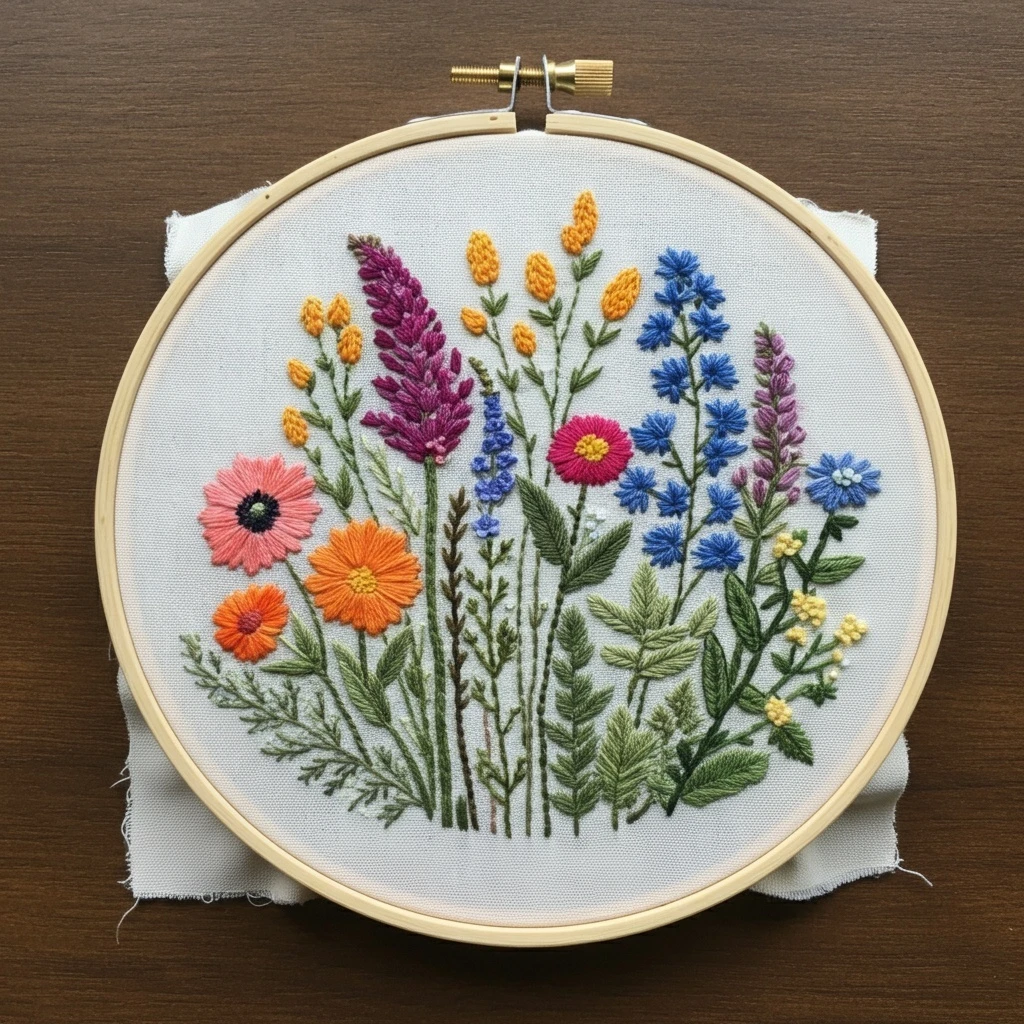
Vibrant Meadow
A bright meadow hoop full of loose wildflowers, varied green grasses, sunny yellow details, pink and coral blossoms, purple accents, and soft airy background space. Colors are estimated from the visible design reference and translated into practical DMC choices for stitching a lively, textured field.
Likely DMC Color Palette
Use this as a close working palette rather than an exact thread-usage chart. The design reads best when the greens are layered first, then the brightest floral notes are scattered across the meadow like natural highlights.
Blending idea: for natural grass, thread one strand of DMC 3345 with one strand of DMC 470. For softer pink flowers, combine one strand of 601 with one strand of 963 on transitional petals.
Stitching Suggestions
Keep the meadow loose and directional: the charm comes from layered, varied stitches rather than perfectly filled shapes.
| Design element | Suggested stitch | Practical notes |
|---|---|---|
| Meadow grass base | Straight stitch, fly stitch, seed stitch | Use 2 strands for the first grassy layer, then add 1-strand blades on top so the field looks airy instead of heavy. |
| Tall stems | Stem stitch or split stitch | Curve stems slightly and vary green shades; avoid making every stem the same height. |
| Small round flowers | French knots | Cluster 1-wrap knots for tiny flowers and 2-wrap knots for larger pops of color. |
| Daisy-like blooms | Lazy daisy stitch | Place petals around yellow French-knot centers; use 1 strand for tiny blooms and 2 strands for focal flowers. |
| Longer petals | Satin stitch or long-and-short stitch | Angle stitches toward the flower center and blend light tips into deeper bases. |
| Purple flower spikes | Detached chain, straight stitch, colonial knots | Stack small stitches upward, spacing them irregularly for a wildflower look. |
| Seed heads and meadow dots | French knots, seed stitch | Add brown, yellow, and white dots last to create depth and scatter. |
| Fine outlining | Backstitch with 1 strand | Outline only selected stems or petal edges; too much outlining can flatten the loose meadow style. |
Thread Count, Shading & Texture
Thread count
- 2 strands for most flowers and medium grass.
- 1 strand for delicate stems, outlines, and top texture.
- 3 strands only for bold foreground knots or thicker flower centers.
Shading approach
Work dark greens low and behind the flowers, then layer brighter greens upward. Use pale pink, white, and yellow only as small highlights so the meadow stays balanced.
Texture rhythm
Alternate smooth petal stitches with knot clusters and loose grass blades. This mix creates the “vibrant meadow” feel without needing dense full coverage.
Where to Start
A clean order of work prevents bulky knots from snagging while you stitch the background grasses.
Beginner-Friendly Practical Tips
Keep the hoop relaxed
Meadow designs look best when stitches are not pulled too tight. Keep tension even so the fabric does not pucker around knot clusters.
Use short thread lengths
Bright floss can fray when making many knots. Cut 14–16 inch lengths and rethread often for cleaner flowers.
Test the knots
Practice French knots on scrap fabric first. If knots disappear, use two wraps or 2 strands; if they look bulky, switch to 1 strand.
Leave breathing room
Do not fill every empty spot. Small gaps of fabric help the colorful wildflowers read as a breezy meadow.
Balance colors
Repeat each bright color in at least three places around the hoop so no single flower feels isolated.
Finish with sparkle
Add white or pale yellow seed stitches at the very end to create light-catching detail across the design.