
Whimsical Woodland Fox And Floral
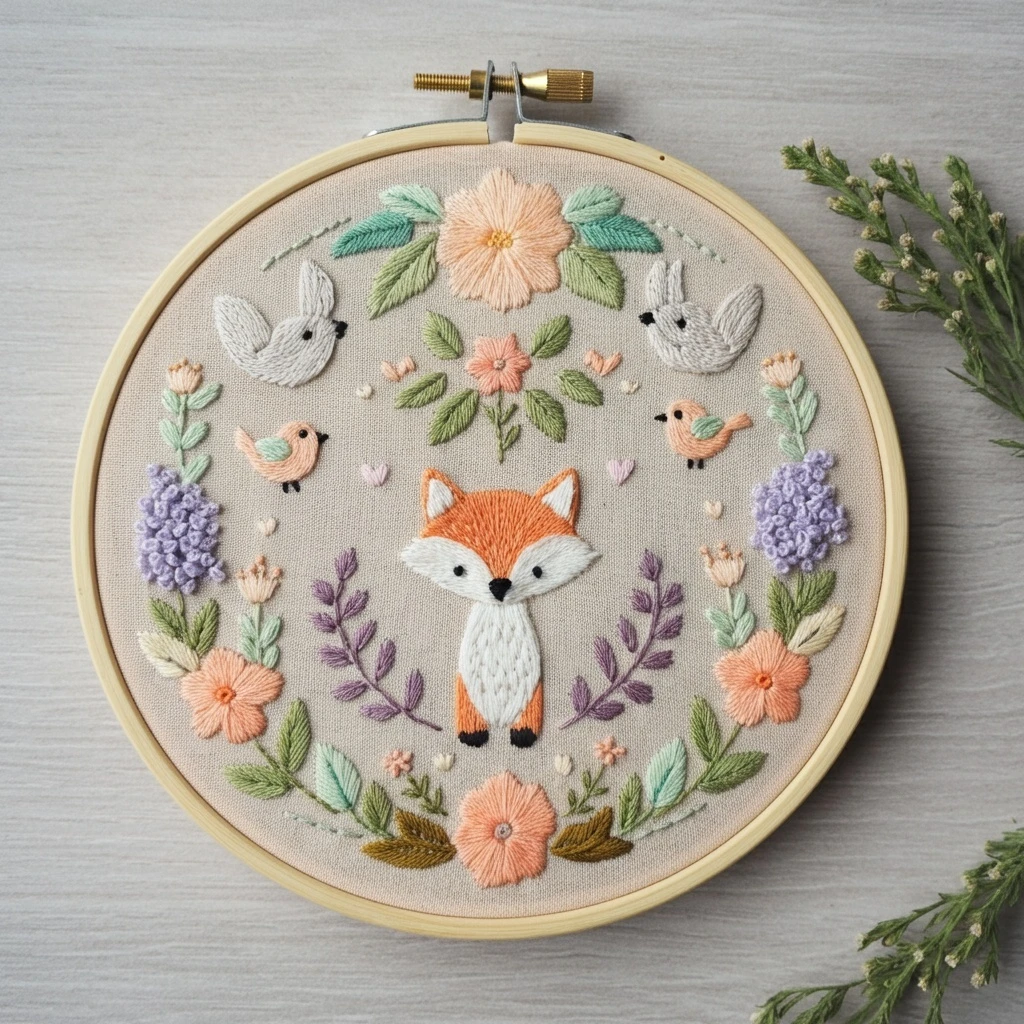
Colors are estimated from the visible embroidery hoop preview and matched to close DMC embroidery floss shades. This design reads as a soft woodland wreath built around a bright fox, white birds, peach florals, lilac blossom clusters, minty foliage, and violet sprigs on a neutral linen ground.

Overall Color Story
Warm fox orange, soft peach blossoms, cool lilac clusters, pale mint leaves, olive greenery, and crisp white accents give the piece a sweet storybook feel.
Best Fabric Pairing
Natural linen, oatmeal cotton, or a warm ivory ground will keep the pastel palette gentle while still letting the fox and flowers stand out clearly.
Recommended Difficulty
Confident beginner to intermediate. The motifs are approachable, but the fox fur direction, small bird details, and clustered blossoms benefit from careful stitch control.
Texture Focus
Use layered long-and-short stitch for the fox, fishbone for leaves, satin or long-and-short for rounded petals, and French knots or colonial knots for the fluffy lilac blooms.
Likely DMC Color Palette
These shades closely match the visible colors in the embroidery preview. Coverage percentages are visual estimates, not exact thread usage.
| DMC | Thread Name | Coverage | Where It Appears / Practical Use Notes |
|---|---|---|---|
| B5200 | Snow White | 14% | Fox cheeks and chest highlights, white birds, ear edges, and tiny light accents. Use for the brightest whites and clean finishing highlights. |
| 3865 | Winter White | 8% | Softens the white areas in feathers and fur. Blend with B5200 when you want a less stark, more natural creamy white. |
| 741 | Tangerine Medium | 12% | Main fox fur color. Excellent for the face, ears, and body sides where you want a bright but friendly woodland orange. |
| 3777 | Terra Cotta Very Dark | 5% | Fox shadowing, deeper fur edges, and warm contrast around lower body details. Use sparingly to keep the fox soft, not harsh. |
| 948 | Peach Very Light | 12% | Large peach blossoms, tiny birds, and blush floral accents. A key shade for the gentle whimsical feeling of the design. |
| 3713 | Salmon Very Light | 6% | Flower shading and petal bases, plus slightly deeper blush areas on small motifs. Blend with 948 for rounded petal dimension. |
| 211 | Lavender Light | 9% | The clustered lilac flower heads on each side. Ideal for fluffy knot clusters and lighter blossom tops. |
| 3740 | Antique Violet Dark | 7% | Purple leafy sprigs and deeper shadows in the lilac clusters. Adds cool contrast against the peach and orange motifs. |
| 3817 | Celadon Green Light | 8% | Minty leaves and fresh light foliage. Use on leaf tips and lighter sides to keep the greenery airy. |
| 3052 | Green Gray Medium | 7% | Leaf midtones and secondary greenery. Good for stems and the middle values between mint highlights and deeper olive shadows. |
| 3051 | Green Gray Dark | 5% | Leaf shadows, stem bases, and darker greenery near the lower wreath. Helps separate overlapping leaves without heavy outlining. |
| 680 | Old Gold Dark | 4% | Golden-brown leaves at the base of the hoop and warm earthy accents that support the woodland palette. |
| 310 | Black | 3% | Eyes, noses, feet, and tiny detail points. Use only 1 strand in most places so the features stay sweet and delicate. |
Stitching Suggestions by Element
Choose stitches that support both softness and tidy definition. Most motifs in this design benefit from directional stitching instead of flat blocks of color.
| Element | Recommended Stitch | How to Use It |
|---|---|---|
| Fox face and outer body | Long and short stitch | Work in the direction of the fur: outward from the face center, downward on the body, and slightly curved around the cheeks. Blend 741 into 3777 for gentle depth. |
| Fox chest and white fur | Long and short stitch or narrow satin stitch | Keep stitches vertical to suggest soft chest fur. Alternate B5200 with 3865 for subtle texture rather than a completely flat white fill. |
| White birds | Long and short stitch with split stitch details | Use small directional changes to suggest layered feathers. Tiny split stitches at wing edges help keep the bird silhouettes neat. |
| Peach birds | Satin stitch or long and short stitch | Keep the bodies smooth and rounded. Add one or two mint wing stitches in 3817 to echo the surrounding leaves. |
| Large peach flowers | Satin stitch or long and short stitch | Stitch petals from the center outward. Shade bases with 3713 and use 948 toward the outer tips for a soft rounded bloom. |
| Lilac flower clusters | French knots or colonial knots | Build the clustered blooms in tight groups using 2–3 strands. Mix 211 with touches of 3740 near the base for depth and a fluffy lilac texture. |
| Leaves | Fishbone stitch | This stitch works beautifully for leaf veins and shape. Use 3817 on highlighted halves and 3052 or 3051 on shadowed halves. |
| Purple sprigs | Straight stitch, fly stitch, or detached chain | These airy side branches look best with slim, slightly angled leaflets. Keep them light so they frame the fox instead of overpowering it. |
| Fine stems and tiny filler motifs | Stem stitch, backstitch, and seed stitch | Use 1 strand for delicate vines and stem lines. Tiny filler flowers and dots can be worked with seed stitches or single detached-chain petals. |
| Eyes, noses, and tiny facial details | Satin stitch or very small straight stitches | Use black sparingly and keep features compact. Overly large eyes or noses will make the piece feel heavier than intended. |
Thread Count, Blending & Detail Notes
These practical adjustments help preserve the soft, storybook character of the piece while still giving it enough contrast to read clearly.
Outlining, Shading & Texture Suggestions
The design is whimsical, so outlines should support shape without becoming heavy. Think softness first, definition second.
Outlining Details
- Use split stitch or fine backstitch only where shapes need extra clarity.
- Outline leaves and floral edges in the nearest darker color rather than in black.
- Reserve 310 mostly for eyes, noses, and a few very tiny accents.
Shading Guidance
- Keep the darkest values at the bases of petals, lower leaf halves, and the fox ear interiors.
- Place highlights on top edges and outer petal tips to maintain a cheerful, light-filled look.
- On the birds, use only a whisper of shadow so they stay airy and cute.
Texture Ideas
- Vary stitch lengths in the fox and bird bodies to suggest soft fur and feather direction.
- Use dense knots for lilac texture and smoother stitches for peach blossoms to contrast fluffy and flat surfaces.
- A few scattered seed stitches in tiny cream or peach accents can make the wreath feel lively and filled out.
Beginner-Friendly Practical Tips
- Trace the design cleanly and mark the center line before stitching to keep the wreath balanced.
- Complete one motif family at a time if that feels easier: fox first, then birds, then flowers, then leaves.
- Test knot size on spare fabric before stitching the lilac clusters so the blossom texture stays consistent.
- Leave the tiniest black details until the end so they stay crisp and do not snag during the rest of the project.
Where to Start
A calm stitching order makes the design easier to manage and helps you preserve the circular balance of the composition.
1. Stitch the fox
The fox is the visual anchor. Completing it first sets the color balance and helps you judge how soft or bold the surrounding motifs should be.
2. Add the birds
The birds create symmetry in the upper half of the hoop. Finish them before the foliage so their silhouettes stay clean and easy to read.
3. Work the large flowers
Place the peach blooms next. These give the wreath its rhythm and will guide where your supporting leaves and filler details should remain light.
4. Fill with lilacs, leaves, and accents
Finish the clustered lilac blooms, then work the greenery, purple sprigs, and tiny filler details. Add all final knots and black features in the last pass.