
DMC palette & hand embroidery notes
Beginner Friendly Bunny
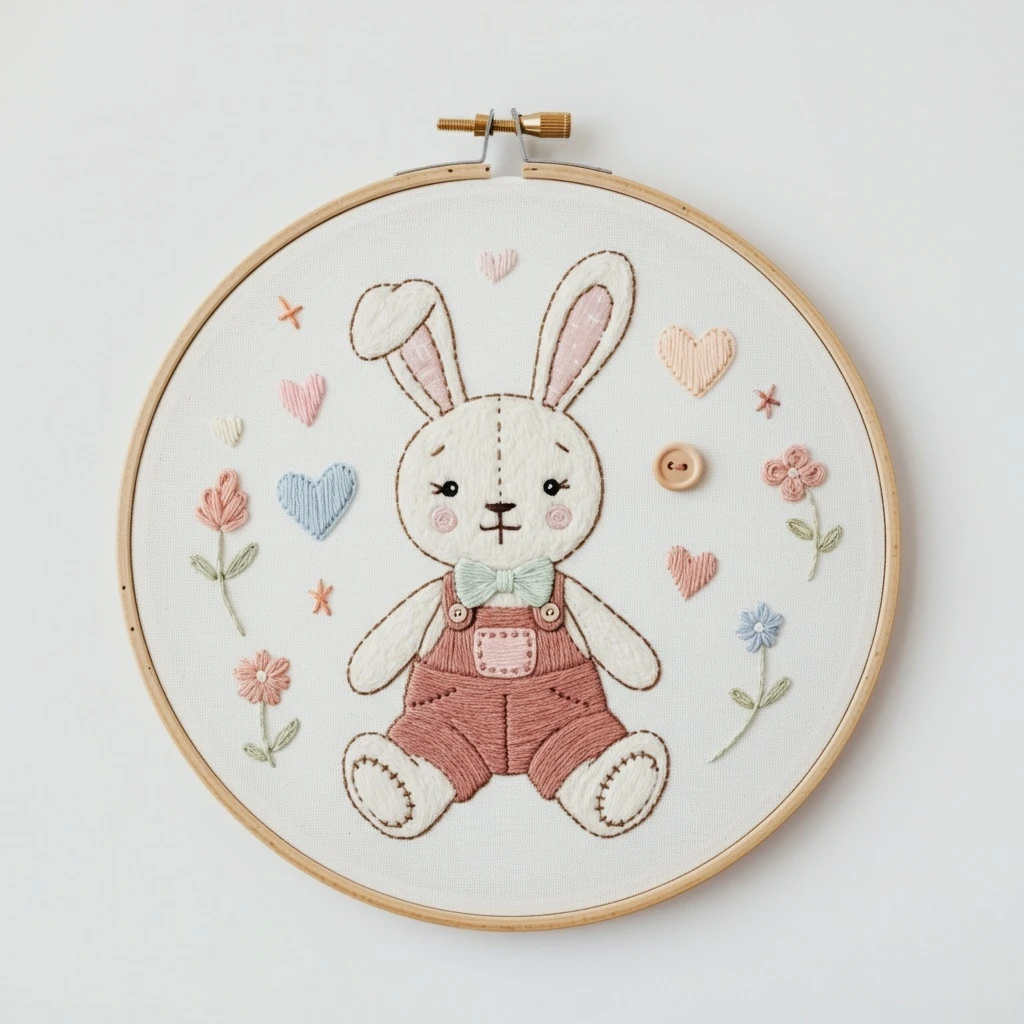
A soft, approachable guide for stitching a sweet bunny hoop with pale fur, peachy ears, tiny flowers, fresh leaves, and crisp facial details. The palette keeps the animal gentle and light while adding just enough garden color to make the design feel finished.
Reference image used for palette planning: rounded bunny form, soft face, small floral accents, leafy sprigs, and a simple beginner-friendly composition.
Color story
Use warm white and pearl gray for the bunny, peach and blush for the ears and cheeks, muted greens for leaves, and small yellow, pink, and lavender accents for flowers. Keep black very controlled so the expression remains soft.
DMC 3865
Winter White
Main bunny fur and soft highlight areas; warmer and gentler than bright white.
DMC 762
Pearl Gray
Light shadow on belly, paws, tail, and lower ear edges.
DMC 415
Pearl Gray
Deeper contour touches where the body needs definition.
DMC 950
Desert Sand
Warm inner ears, nose blush, and very soft cheek warmth.
DMC 3778
Terra Cotta Light
Inner ear shading, peachy flower centers, and warm accents.
DMC 310
Black
Eyes, whisker dots, and the smallest facial details only.
DMC 3347
Yellow Green Medium
Primary leaf mid-tone and tidy sprig stems.
DMC 3348
Yellow Green Light
Leaf highlights and fresh new-growth touches.
DMC 3052
Green Gray Medium
Muted shadow leaves and grounding foliage.
DMC 743
Yellow Medium
Golden flower petals and sunny knots.
DMC 3689
Mauve Light
Soft pink blossoms and small decorative petals.
DMC 3836
Grape Light
Lavender flower clusters for cool balance.
Suggested stitch map
Thread-count guide
- 1 strand: facial details, whiskers, fur shading, and fine flower stems.
- 2 strands: main outline, leaf shapes, most petals, and beginner-friendly line work.
- 3 strands: fuller petals or bold leaf accents on larger hoops.
- 6 strands: avoid except for a few raised knots; it can overwhelm the bunny’s face.
Blending, shading & texture
Blend 1 strand 3865 with 1 strand 762 for pale shadow transitions.
Blend 950 with 758 for peachy inner ears that remain delicate.
Pair 3347 and 3348 in alternating leaf stitches for natural movement.
Use 743 and 3822 as tiny knots rather than large filled areas.
Do not pack the bunny fur too tightly. Leaving a little fabric visible between short strokes helps the body look fluffy and keeps the pattern beginner-friendly.
Outlining details
- Use 762 for a soft visible bunny outline; use 415 sparingly on shadowed curves.
- Use 310 with one strand for eyes and whisker dots. Tiny stitches are enough.
- Use 3052 or 3347 in stem stitch for greenery; back stitch is a neat beginner substitute.
- Let petal stitches form flower shapes naturally instead of outlining every petal.
Practical order
- Transfer the design lightly and hoop the fabric with even tension.
- Stitch stems and leaves first.
- Add flower petals and French knot centers.
- Outline the bunny and add soft fur strokes.
- Finish with eyes, nose, blush, and final highlights.
Finishing notes
Use a fresh needle for the white fur to avoid carrying darker fibers into pale stitches. If stitching on loose fabric, add a light stabilizer so satin and short-and-long stitches sit smoothly. Press from the back on a towel to protect French knots and raised floral accents.
For display, lace the fabric at the back of the hoop before trimming. Check the bunny’s eye placement and expression before final tightening.